
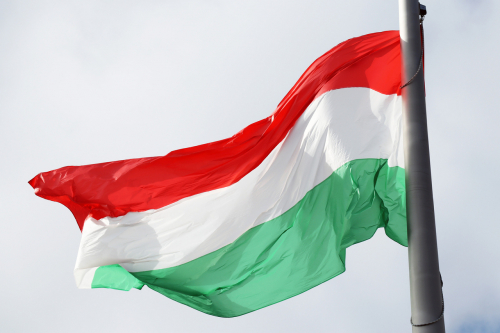
Based on a survey conducted by the Youth Research Institute, the majority of young people regard the Hungarian flag, National Anthem, coat of arms and the Holy Crown as the most fundamental national symbols. Among young people aged 15 to 39, the National Anthem is considered to embody national sentiment to the greatest extent.
Today, national identity is regularly the subject of political debate; however, there is no doubt that belonging to a community, whether familial, local or national, is a fundamental human social need. The tangible expressions of national identity are the national symbols enshrined in the Fundamental Law. The Youth Research Institute sought to examine how Hungarian young people relate to these symbols.
Young respondents consider the Hungarian flag (86%), the National Anthem (73%), the Hungarian coat of arms (64%) and the Holy Crown (52%) to be the most essential national symbols.
For them, national sentiment is most strongly embodied by the National Anthem (86%), the Hungarian coat of arms (65%), the Hungarian flag (63%) and the Holy Crown (52%). The orb, the sceptre and the coronation mantle are viewed rather as historical artefacts.
For young people living in rural areas, the National Anthem plays a more important role in expressing national sentiment (88%) than it does in the lives of young people in Budapest (78%). Attitudes towards the Hungarian flag are similar across age groups, genders, and between rural and capital-based respondents; however, the Hungarian coat of arms expresses national sentiment to a lesser extent among those aged 15–17 (54%) than among those aged 35–39 (72%).
Perceptions of the Holy Crown present the most mixed picture: 59% of men consider the Crown to be an embodiment of national sentiment, whereas among women this proportion is only 44%. Differences can also be observed by age group and between Budapest and rural areas: older age groups are more likely than younger ones to regard the Holy Crown as an embodiment of national sentiment, and while for Budapest residents it is more often seen as a historical artefact, in the lives of young people in rural areas it functions as an expression of national sentiment.
The representative survey was conducted in autumn 2025. Responses were collected through a self-administered online questionnaire (CAWI), with a total sample of 1,000 Hungarian citizens aged 15–39.
Budapest, 26 November 2025