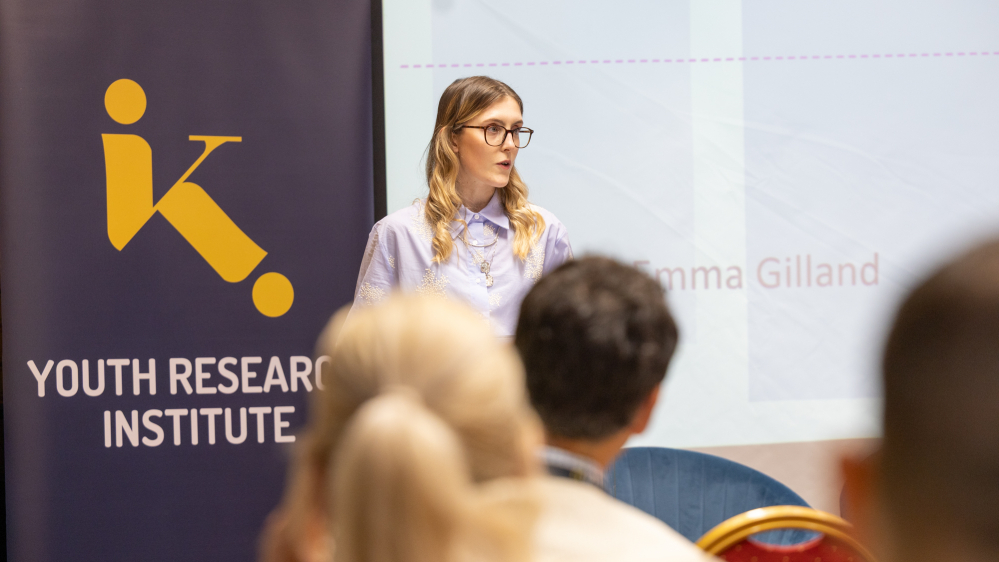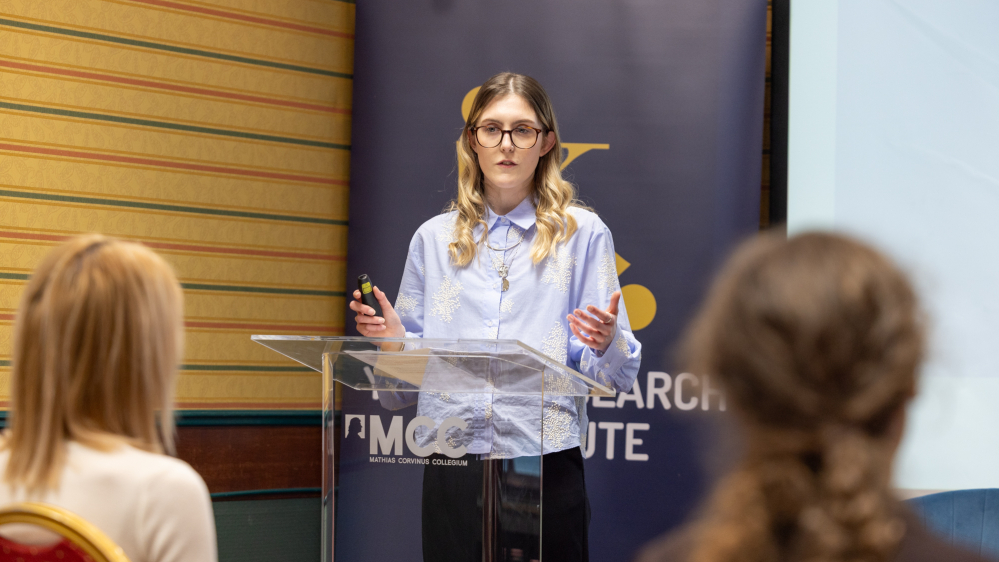
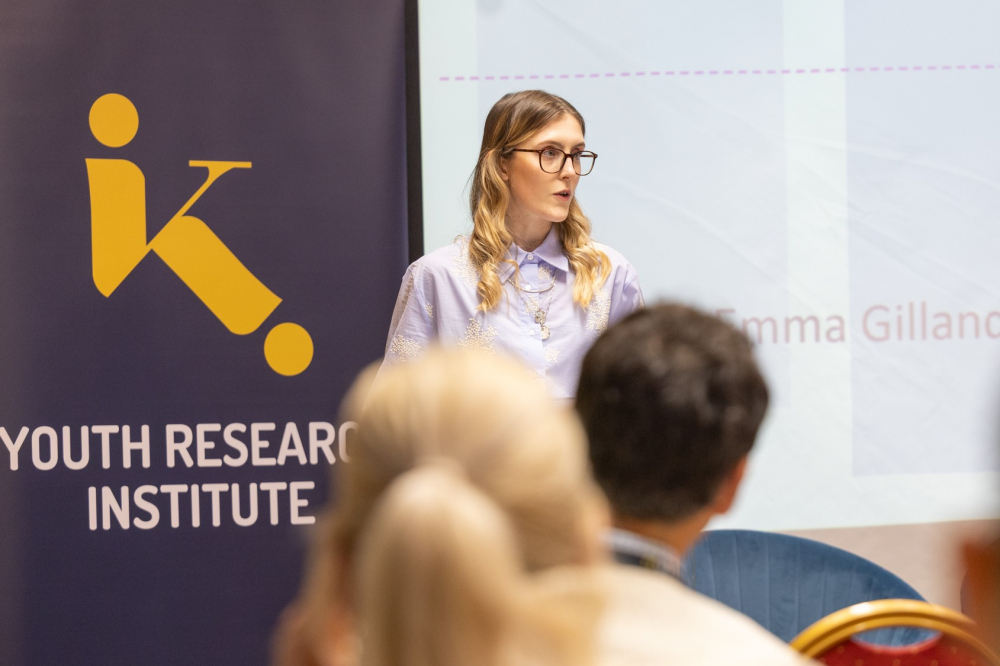
Emma Gilland (Academy of Ideas) was hosted by the Youth Research Institute, where she delivered a presentation on fertility trends and family policy, drawing on her interview-based research conducted among British Generation Z females. The dramatic decline in fertility observed across the Western world has become one of the most pressing social issues of our time. But what considerations shape the thinking of females in their twenties as they plan their futures? Gilland’s research examines, through the lens of British Generation Z, why childbearing is being postponed—or in some cases forgone altogether—and whether government support measures offer a viable solution.
Security Above All
While public discourse often narrows the issue to the shortage of nursery places, the research highlights that, for Generation Z, having children is closely associated with assuming full financial responsibility. Participants in the study identified the housing crisis, labour market insecurity, and the rising cost of living as far more significant deterrents than shortcomings in family policy.
The Trap of “Intensive Parenting”
One of the most striking findings of the research concerns the transformation in attitudes towards parenthood. For Generation Z, raising children is no longer perceived as a natural life process, but rather as a resource-intensive undertaking. Influenced by the ideals of “gentle parenting” and intensive parenting, parenthood is frequently regarded as a stressful endeavour. Many fear parental burnout and doubt their capacity to mobilise sufficient emotional and financial resources. Children are often seen as posing a fundamental challenge to gender equality and career progression, particularly in light of the so-called “motherhood wage penalty”.
Haven in a Heartless World: The Enduring Value of Family
The paradox lies in the fact that, despite these anxieties, the desire for family life has not diminished. On the contrary, as childbearing has increasingly become a conscious individual decision, the value of family has been elevated. Many perceive it as a “refuge in a heartless world”. Generation Z women do not wish to choose between career and home; rather, they seek a “new middle path” in which flexible working arrangements and shared parental responsibilities are fundamental.
The Way Forward – Policy Implications
Gilland’s research underscores the need for a holistic approach that fosters a predictable economic environment—particularly in terms of housing and stable employment—supports flexible forms of work, and restores confidence in parenthood by emphasising its communal and personal value in contrast to increasingly unrealistic expectations.
Generation Z is not opposed to having children; rather, it aspires to a world in which starting a family does not entail total financial and personal sacrifice.
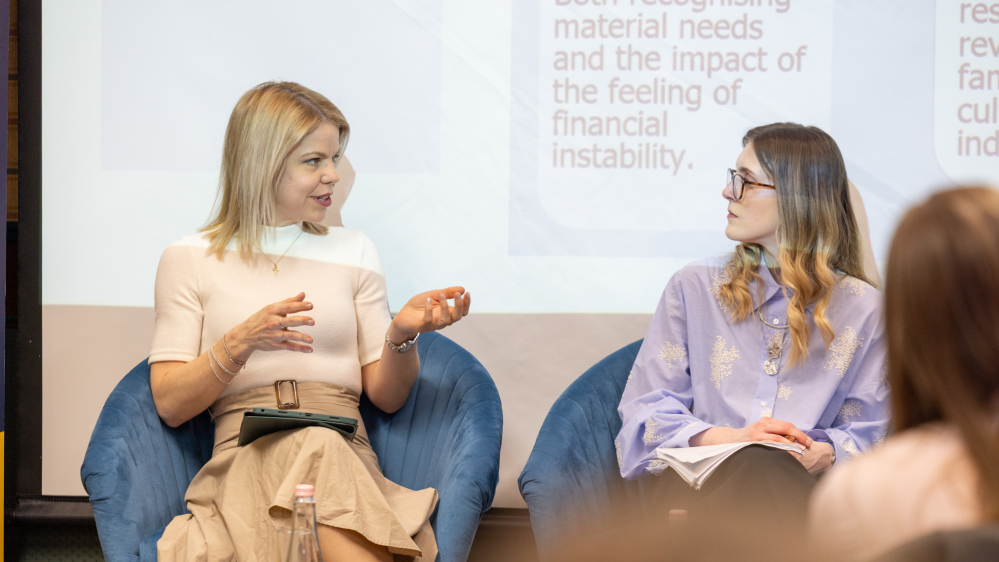
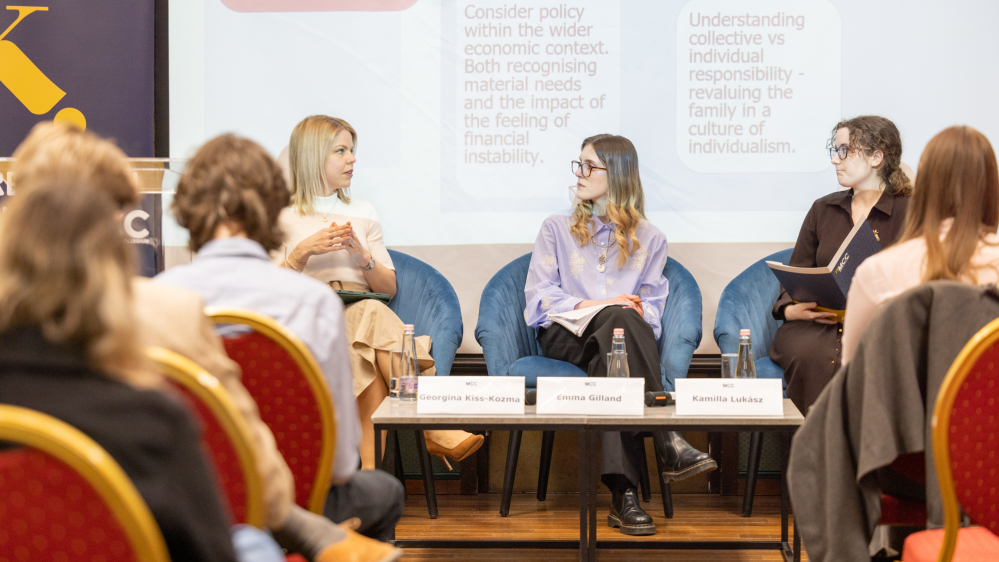
Following the lecture, a panel discussion featured Georgina Kiss-Kozma, Deputy Director of the Youth Research Institute, who noted that, according to the Institute’s most recent survey, the majority of young people continue to support the institution of marriage and childbearing. However, she also highlighted the growing problem of social isolation among young people, arguing that strengthening communities and family institutions would represent a fundamental solution.
The discussion was moderated by MCC’s Kamilla Lukász, who emphasised the stimulating and thought-provoking nature of the presentation. After addressing questions from the audience, she concluded by observing that, for Generation Z, having children is no longer an automatic life course expectation, but rather a conscious and responsible choice.