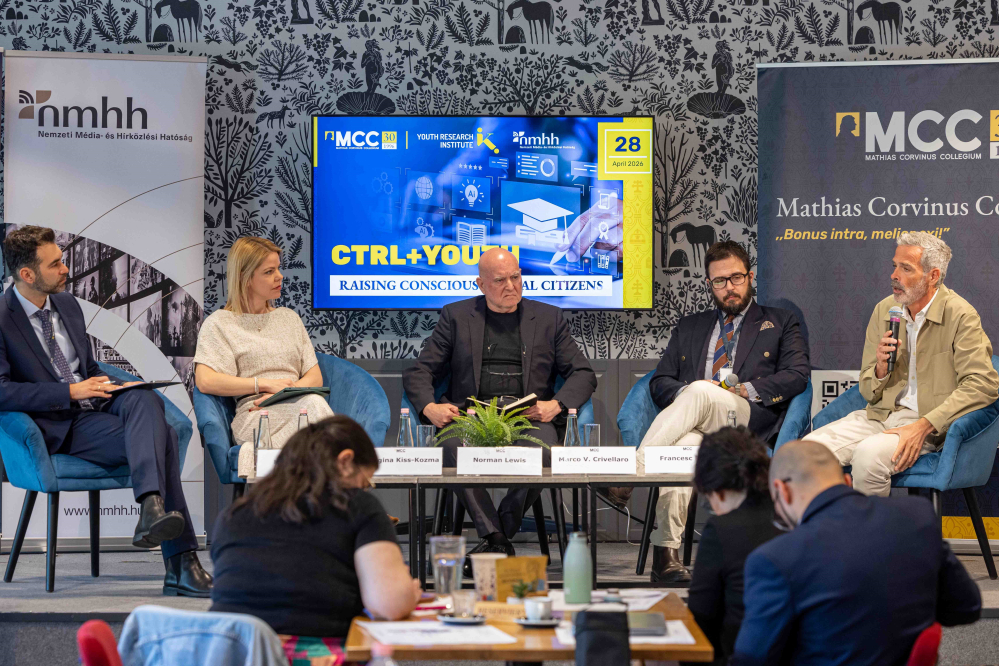
Digital technology has evolved beyond a mere instrument to become a fundamental framework of everyday existence, profoundly shaping the cognitive patterns, social relationships, and future orientations of younger generations. The expansion of the digital sphere has redefined the structures of social interaction and individual development, particularly with regard to processes of socialisation among youth. In response to this complex phenomenon, the Youth Research Institute at MCC, in collaboration with Hungary’s National Media and Infocommunications Authority (NMHH), convened the international bilingual scientific conference entitled CTRL+YOUTH – Raising Conscious Digital Citizens. The primary objective of the event was to foster transnational knowledge exchange and professional collaboration, while offering relevant theoretical and practical frameworks for parents, educators, and policymakers to support the conscious and responsible shaping of the digital environment.
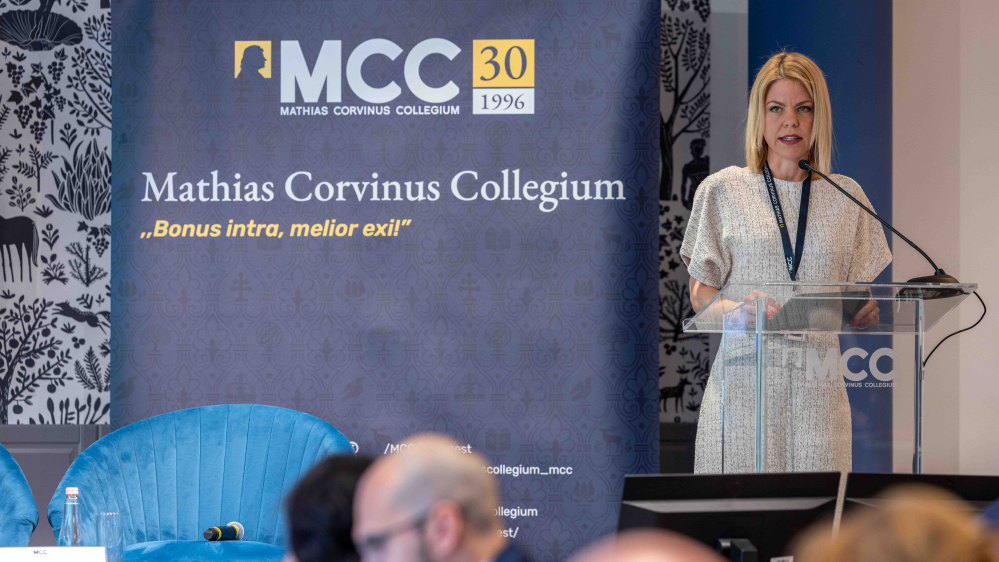
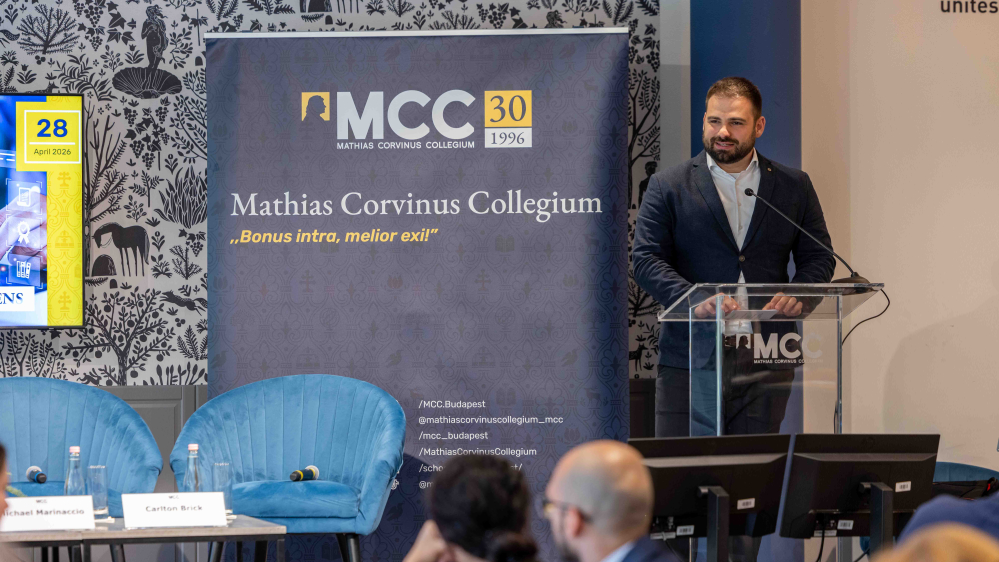
The conference was formally opened by Dr Ákos Somogyi, Head of the Child Protection Department at NMHH, and our Institute’s Deputy Director Dr Georgina Kiss-Kozma who emphasised the growing importance of child protection and conscious media use in digital spaces.
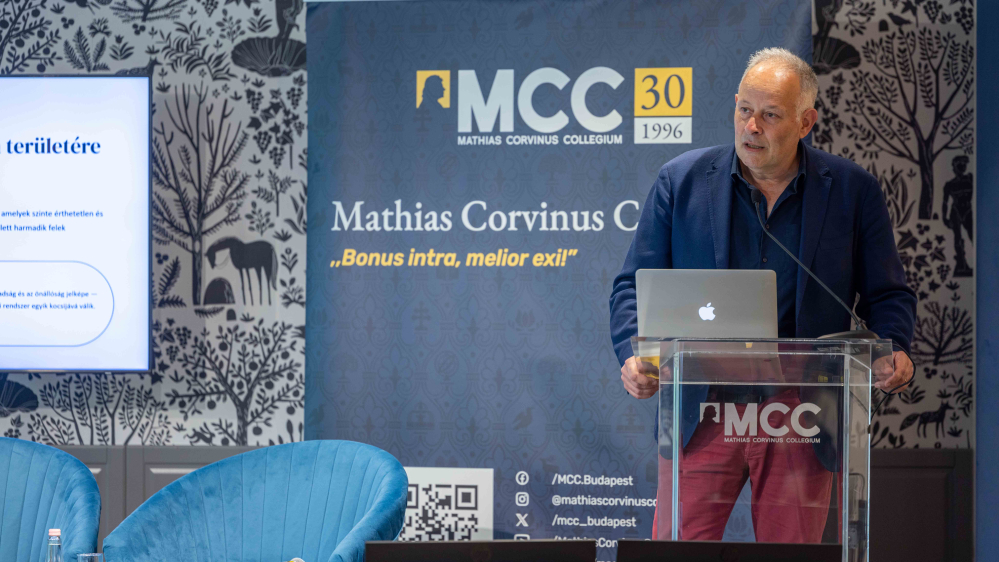
The academic discourse of the conference was framed by an introductory address from Strargum CEO Laurent Ozon. The Paris-based expert focused on one of the most pressing technological and ontological questions of our time: the preservation of individual autonomy and national sovereignty in the digital age. He argued that, amid rapid technological innovation, maintaining human integrity and freedom of decision-making is not merely a technical issue but a fundamental ethical and societal imperative, one that delineates the developmental trajectory of future conscious digital citizens.
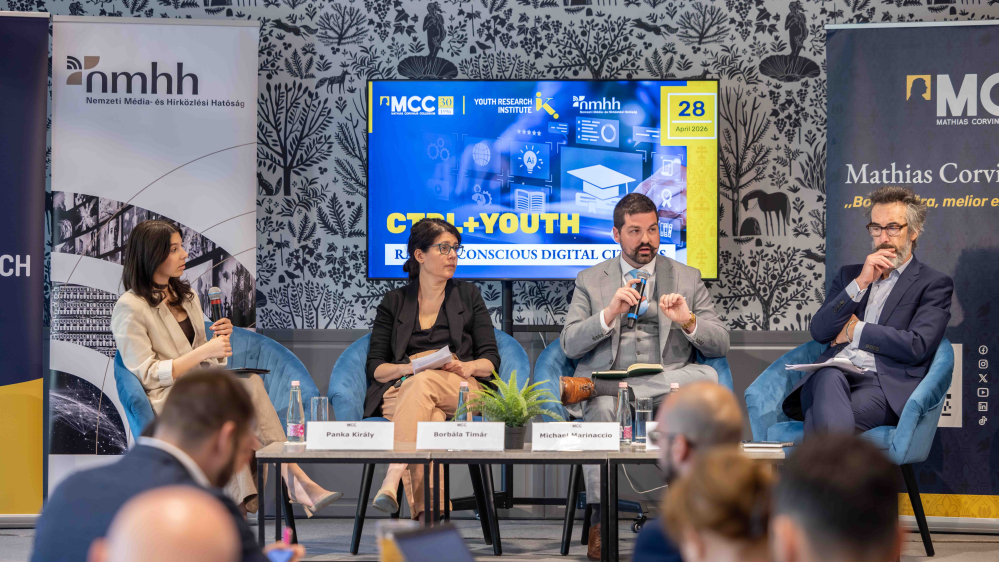
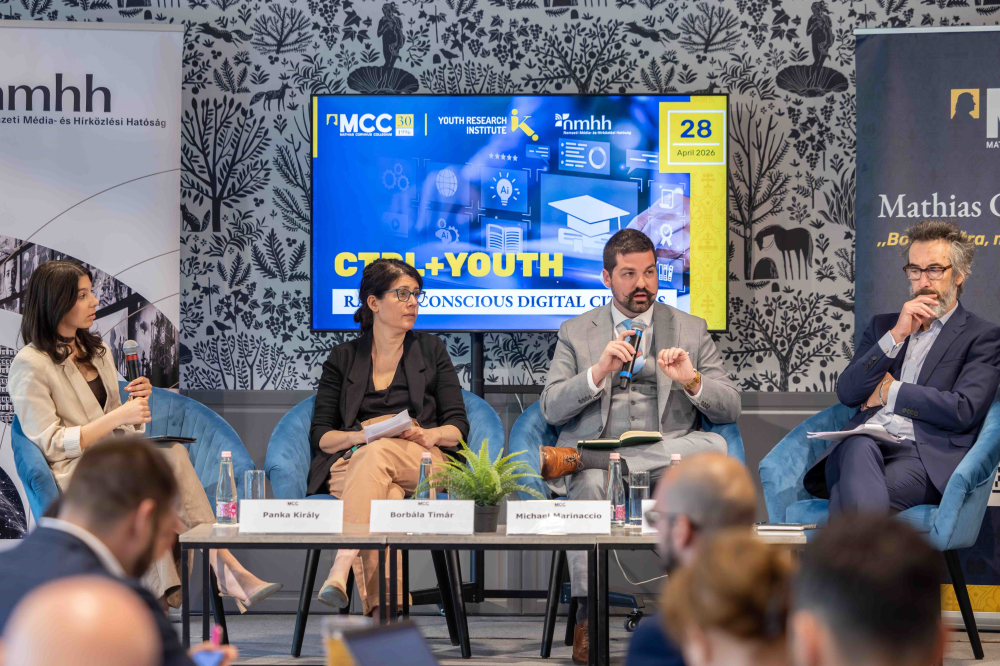
The English-language panel discussion entitled Risks and Safeguards in Digital Screen Use examined the risks associated with digital screen use and the mechanisms of conscious protection from an international perspective. Moderated by MCC’s Panka Király, the panel featured Michael Marinaccio (Executive Director of the Center for Responsible Technology, USA), Carlton Brick (sociologist and researcher, UK), and Borbála Timár (digital child protection expert at EduTech Hungary). A central thesis of the discussion was that digital presence in itself is not inherently problematic; rather, the critical factors are contextual conditions and the patterns of use acquired by children. From a sociological perspective, Carlton Brick highlighted that contemporary challenges stem less from the technological advancement of artificial intelligence than from irresponsible or uninformed user behaviour. While new technologies dramatically accelerate content production and enhance visual quality, the underlying substance of content often remains unchanged. He illustrated this continuity by drawing parallels between emotionally charged animal representations in Disney animations and those generated by artificial intelligence, suggesting that changes in technological form do not necessarily entail structural transformations in audience experience. In contrast, Michael Marinaccio advocated for stronger institutional regulation and structured frameworks. He outlined a forthcoming guideline for American schools that moves beyond the traditional dichotomy of prohibition and permission. This proposed framework is functionally oriented, requiring a critical assessment of the pedagogical value and necessity of each new digital tool prior to its introduction into the educational process. Drawing on Hungarian experiences in digital child protection, Borbála Timár concurred with the emerging expert consensus that strategies based solely on prohibition are neither sustainable nor effective in the current technological environment. She emphasised that digital literacy must be treated as a core competence across all levels of education. The key lies not in restricting access to devices, but in fostering conscious, reflective, and critical attitudes that enable young people to make responsible decisions in digital contexts over the long term.
The panel concluded that a paradigm shift is required in the regulation of digital device use: prohibition must give way to functional analysis and the cultivation of digital awareness. While technology accelerates content consumption, effective protection depends not on technological restriction but on the development of user competencies and the establishment of institutional frameworks that integrate digital tools into everyday life in ways that generate genuine value.