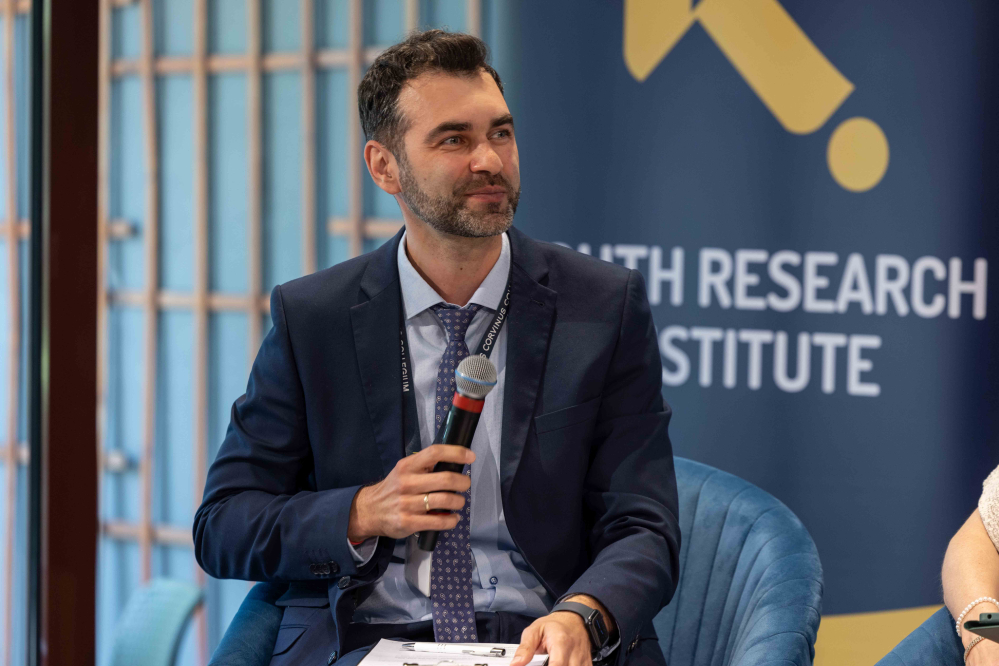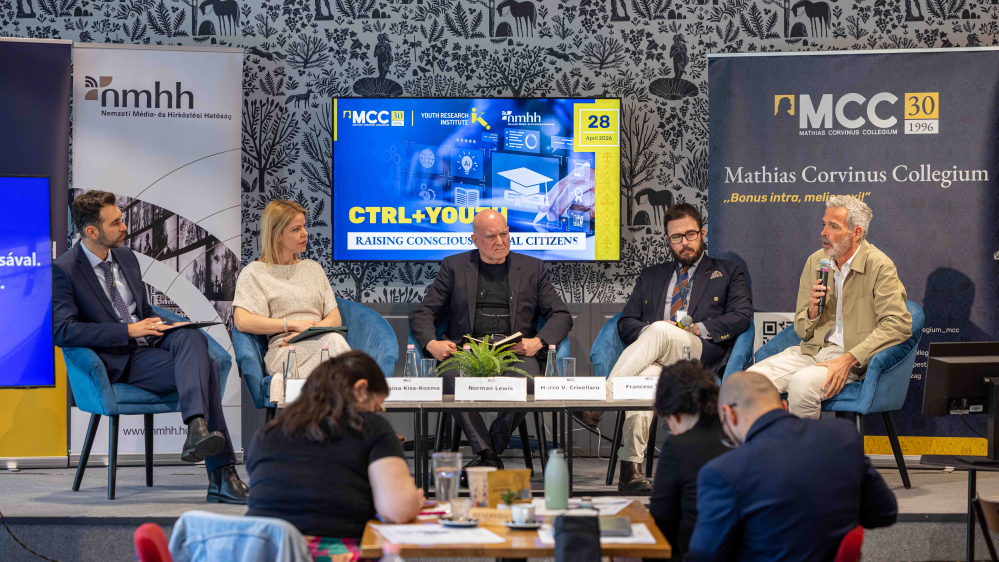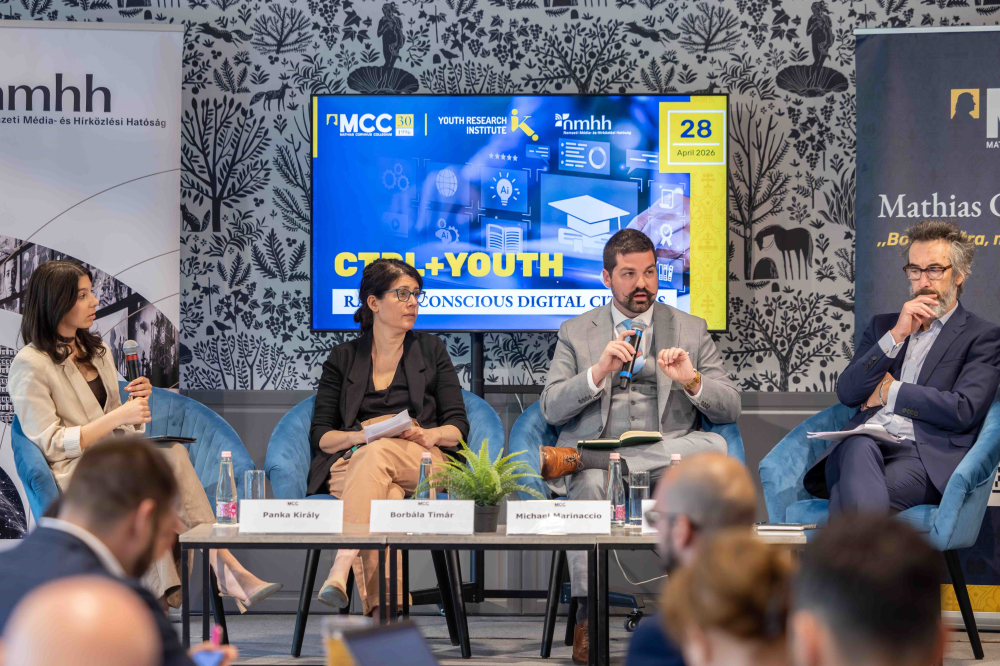
Digital technology has evolved beyond a mere instrument to become a fundamental framework of everyday existence, profoundly shaping the cognitive patterns, social relationships, and future orientations of younger generations. The expansion of the digital sphere has redefined the structures of social interaction and individual development, particularly with regard to processes of socialisation among youth. In response to this complex phenomenon, the Youth Research Institute at MCC, in collaboration with Hungary’s National Media and Infocommunications Authority (NMHH), convened the international bilingual scientific conference entitled CTRL+YOUTH – Raising Conscious Digital Citizens. The primary objective of the event was to foster transnational knowledge exchange and professional collaboration, while offering relevant theoretical and practical frameworks for parents, educators, and policymakers to support the conscious and responsible shaping of the digital environment.
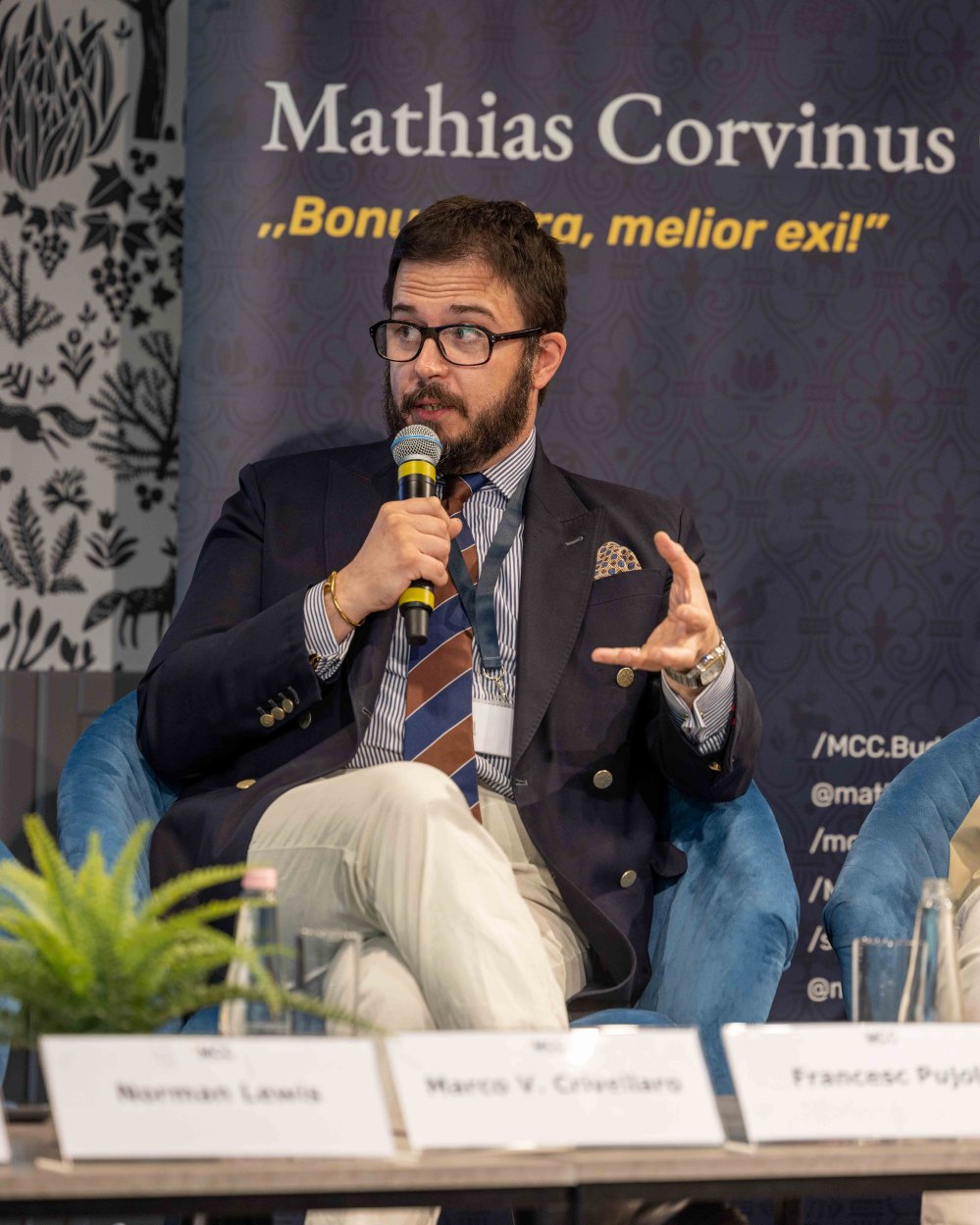
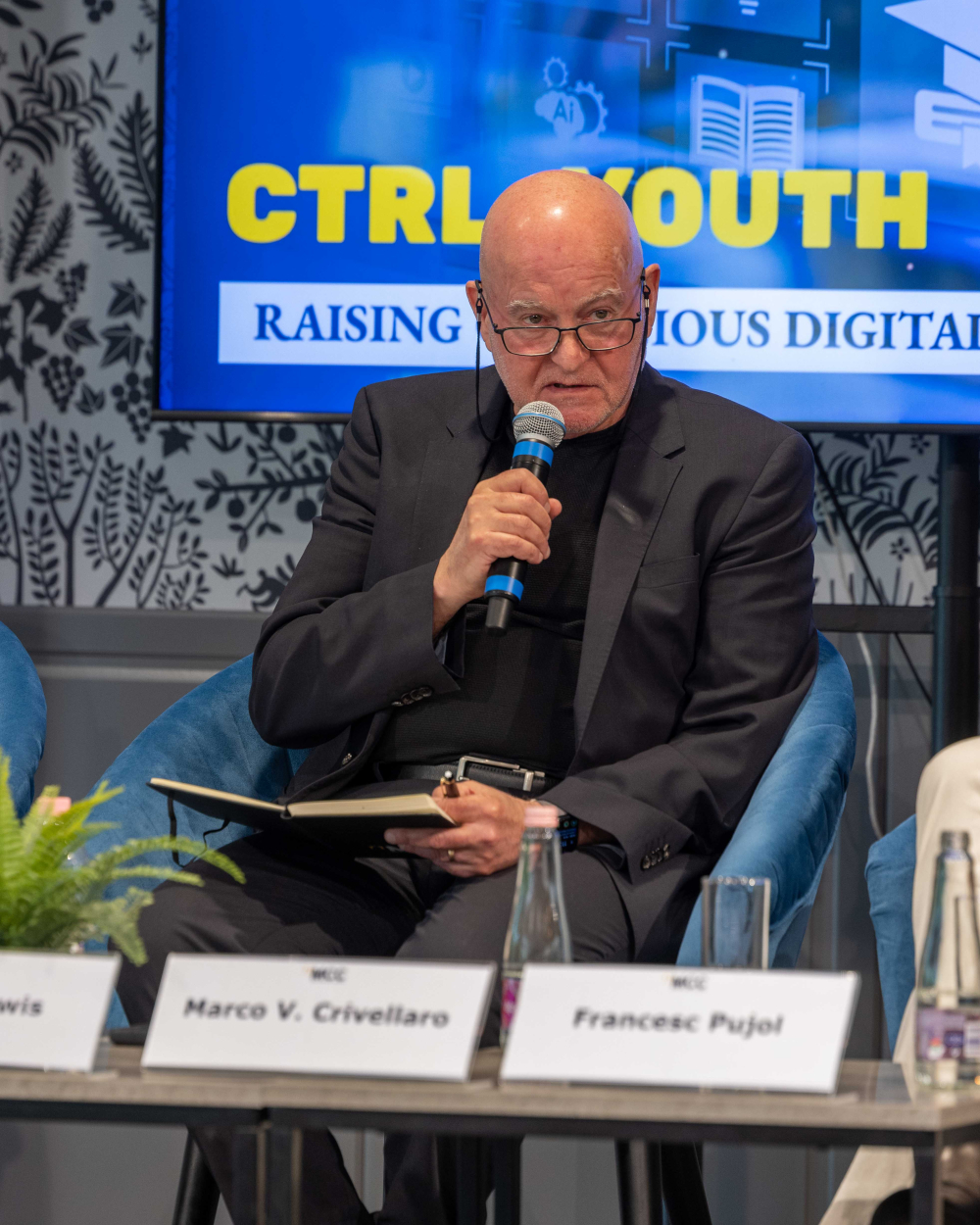
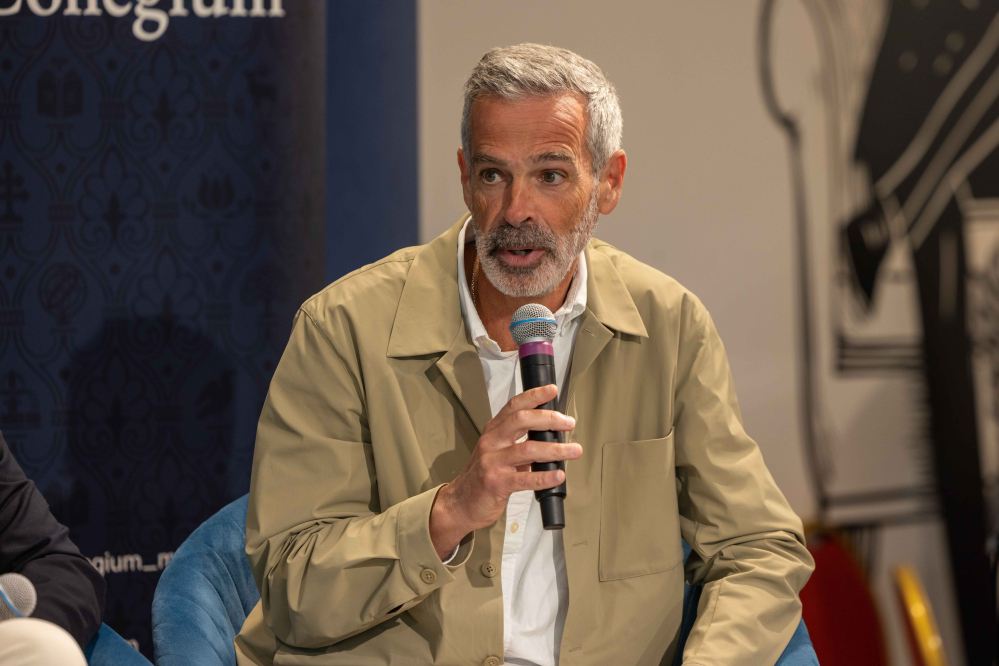
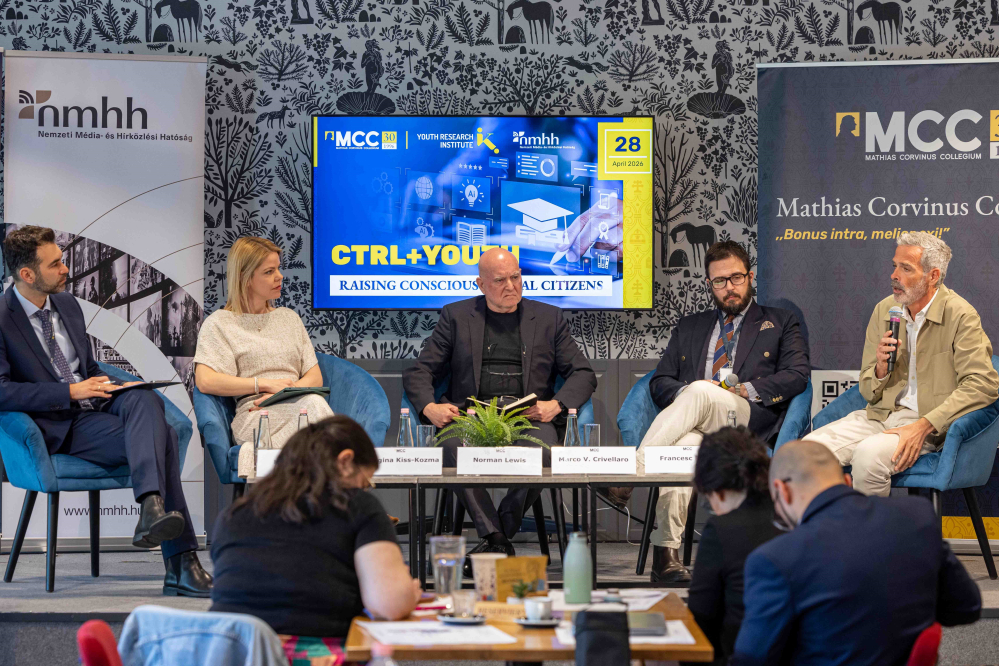
The panel discussion entitled Digital Society: The Social Consequences of Technological Innovation brought together Hungarian and international experts to explore how individuals may remain conscious and autonomous in a technology-driven world. Participants—including Norman Lewis (Visiting Fellow, MCC Brussels), Francesc Pujol (Director, Economics, Leadership & Governance, Universidad de Navarra, Spain), Marco V. Crivellaro (Visiting Fellow, MCC), and Georgina Kiss-Kozma—highlighted the inseparability of technological development and its social consequences.
A central theme of the discussion was the relationship between artificial intelligence and human nature. Francesc Pujol argued that, in the emerging era of transhumanism, artificial intelligence is no longer merely an external process but increasingly functions as an internalised tool capable of forming deep emotional bonds with users. In contrast, Norman Lewis stressed the primacy of human agency, reminding the audience that artificial intelligence lacks genuine contextual awareness and independent reasoning, and that control must therefore remain in human hands. Marco V. Crivellaro added that, despite the rapid pace of technological change, fundamental human values and identity are altered only if individuals themselves permit such influence.
The panel also devoted considerable attention to the impact of the digital environment on young people. Georgina Kiss-Kozma highlighted the social pressures associated with constant online availability, which significantly hinder genuine rest and deep engagement. She also warned of a widening digital divide between conscious users and those falling behind, as well as increasing loneliness among young people, exacerbated by weakening community ties and the postponement of traditional milestones of adulthood. Norman Lewis introduced a provocative sociological perspective, suggesting that the proliferation of digital tools may reflect a broader erosion of trust between adults and younger generations; thus, the root of the challenge lies not in technology itself but in the weakening of the social fabric.
Proposed solutions pointed towards the necessity of a form of “humanistic leadership”. Francesc Pujol advocated an approach in which artificial intelligence is used not to replace thinking but to support critical reflection and deeper contemplation. Crivellaro emphasised individual intellectual development—such as reading and lifelong learning—as a means of safeguarding the mind, rather than relying solely on regulatory measures. Overall, the panel concluded with cautious optimism, underlining that strengthening communities and providing conscious adult role models can counterbalance the fragmenting effects of technological innovation. Just as the advent of literacy did not extinguish philosophy, the digital age may offer new opportunities for the expression of humanity, provided that critical responsibility is preserved.