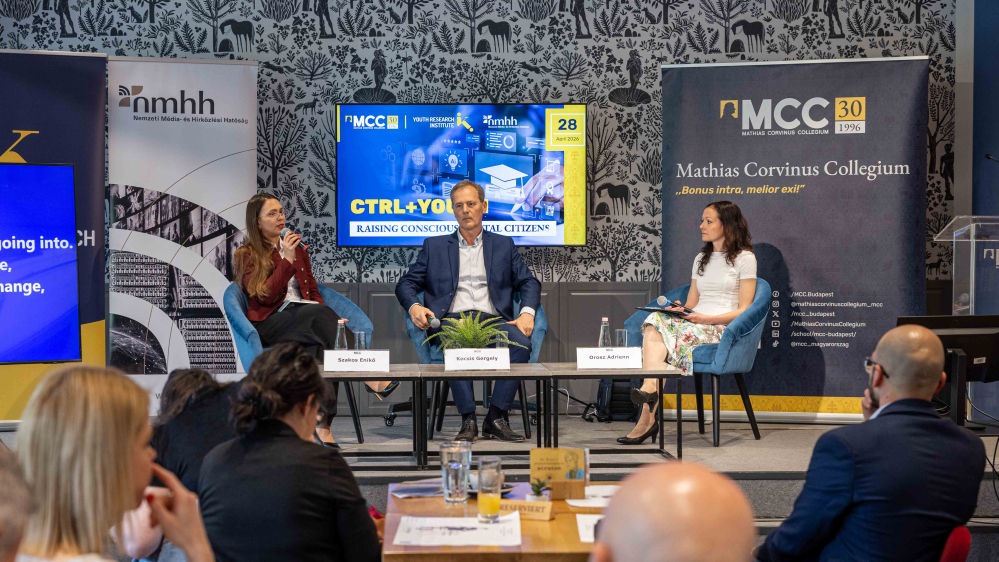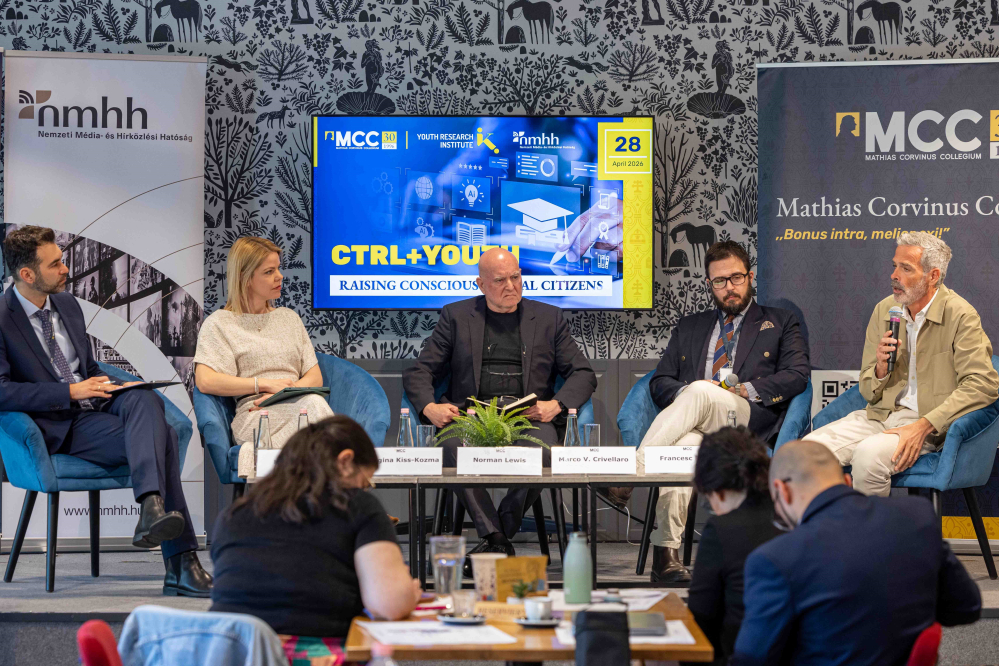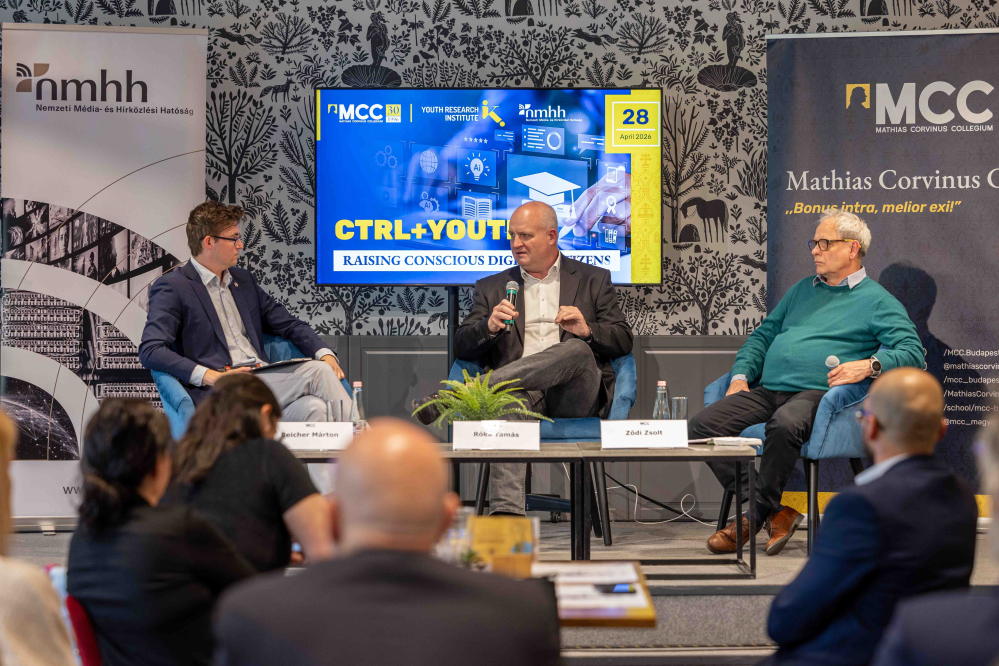
Digital technology has evolved beyond a mere instrument to become a fundamental framework of everyday existence, profoundly shaping the cognitive patterns, social relationships, and future orientations of younger generations. The expansion of the digital sphere has redefined the structures of social interaction and individual development, particularly with regard to processes of socialisation among youth. In response to this complex phenomenon, the Youth Research Institute at MCC, in collaboration with Hungary’s National Media and Infocommunications Authority (NMHH), convened the international bilingual scientific conference entitled CTRL+YOUTH – Raising Conscious Digital Citizens. The primary objective of the event was to foster transnational knowledge exchange and professional collaboration, while offering relevant theoretical and practical frameworks for parents, educators, and policymakers to support the conscious and responsible shaping of the digital environment.
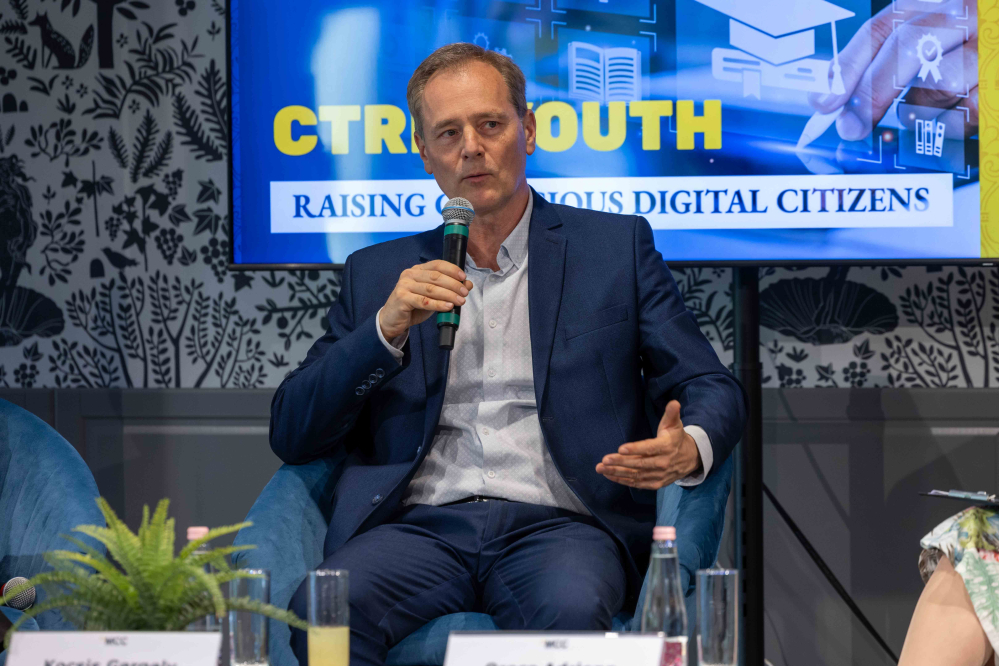
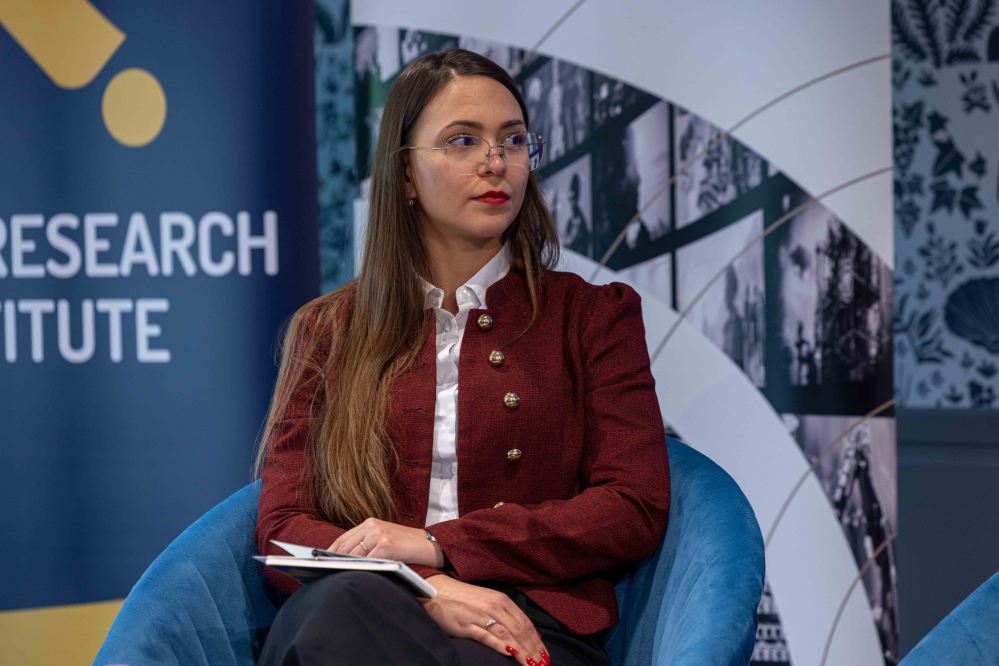
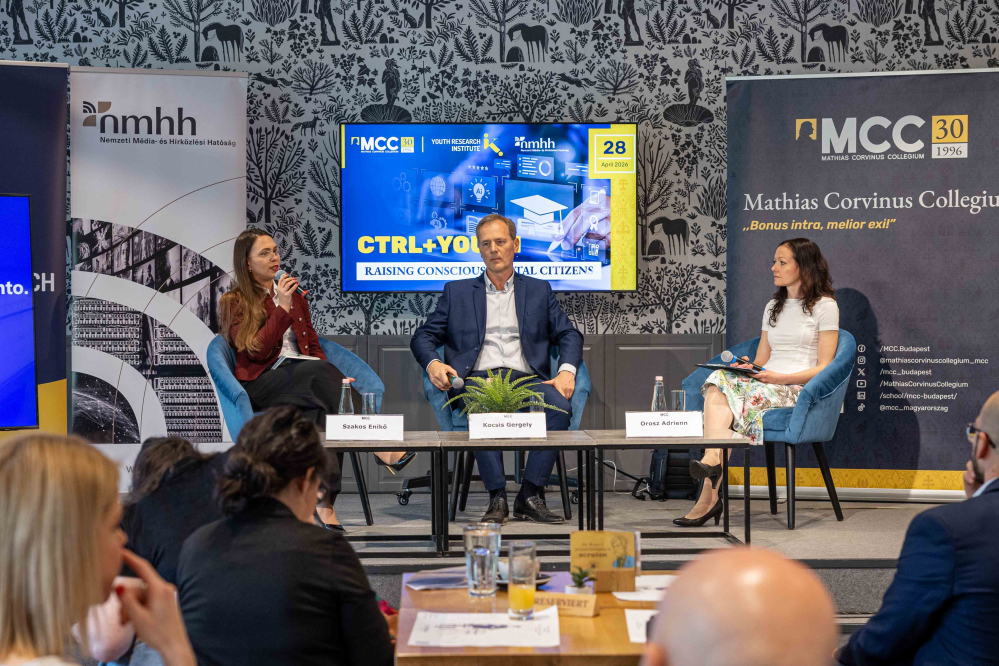
The third panel, conducted in Hungarian and moderated by our Institute’s Adrienn Orosz, examined the transformative impact of artificial intelligence on education and the labour market. Participants included Enikő Szakos, Head of the NITK Research Centre at the National University of Public Service and analyst at the Learning Research Institute, and Gergely Kocsis, technology and legal expert at the Hungarian Artificial Intelligence Council. The discussion emphasised that secondary and higher education are undergoing structural transformations that, while presenting challenges, also necessitate institutional adaptation. The systemic significance of these processes is underscored by the establishment of new bodies coordinating the societal and economic integration of artificial intelligence technologies.
Experts identified conscious technology use and adaptability as key links between digital experience and labour market success. Enikő Szakos argued that the role of teachers remains indispensable, even in an era dominated by digital noise and algorithm-driven social media. Indeed, their presence as tangible “human compasses” is becoming increasingly valuable. As young people spend substantial time interacting with chatbots and generative models, the personal example and mentorship of teachers provide an essential point of reference capable of counterbalancing the sterile perfection of machine-generated responses. It was further noted that technological innovation must not override classical pedagogical values if our aim is to educate responsible, thinking citizens rather than mere users of tools. A clear distinction must be drawn between skills that should be taught traditionally and processes that may be delegated to algorithms. While data processing and repetitive tasks can be entrusted to artificial intelligence to free creative capacities, critical thinking, ethical judgement, and independent reasoning must remain at the core of human-centred education.
From a legal and regulatory perspective, Gergely Kocsis highlighted the tension between the rapid pace of technological development and the slower response time of legislation. The European Union’s AI Act, alongside national regulatory frameworks, aims to establish a protective structure safeguarding young users—the most intensive users of digital technologies—from manipulative algorithms and risks such as dynamic pricing. The challenge for lawmakers lies in ensuring both competitiveness and the integrity and reliability of digital content.
In conclusion, the panellists reached a consensus that the foremost responsibility of parents and educators is to facilitate the development of young people into conscious digital citizens. This process begins with fostering an understanding of how technology operates, alongside the cultivation of a critical mindset. Such foundations enable individuals not merely to remain passive subjects of an AI-driven world, but to exercise agency and assume an active role in shaping the digital processes that surround them.