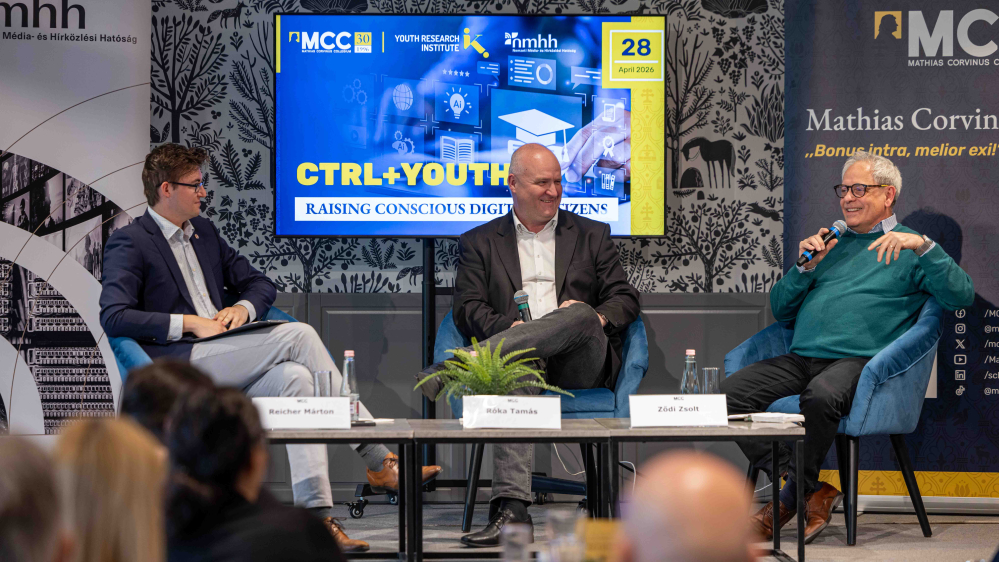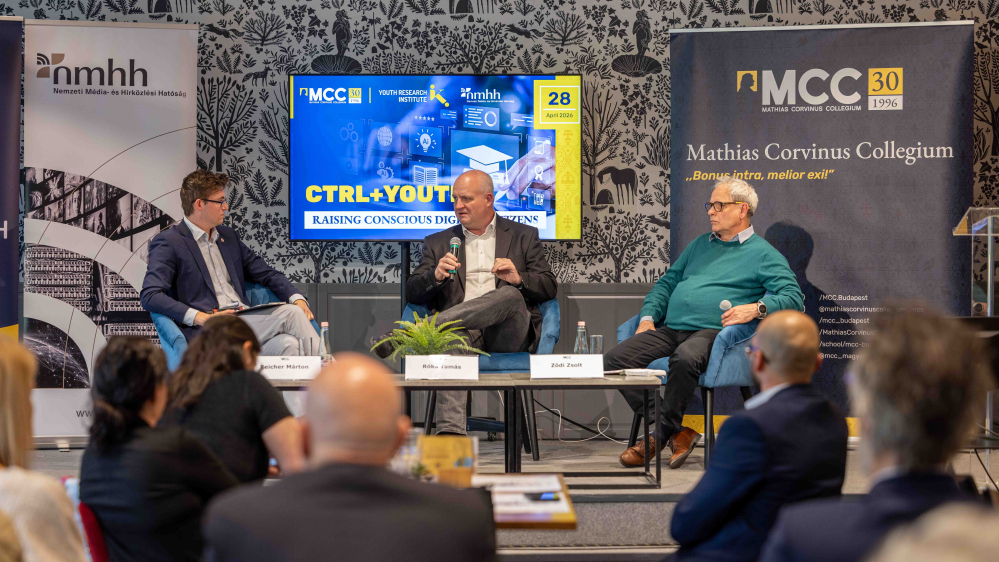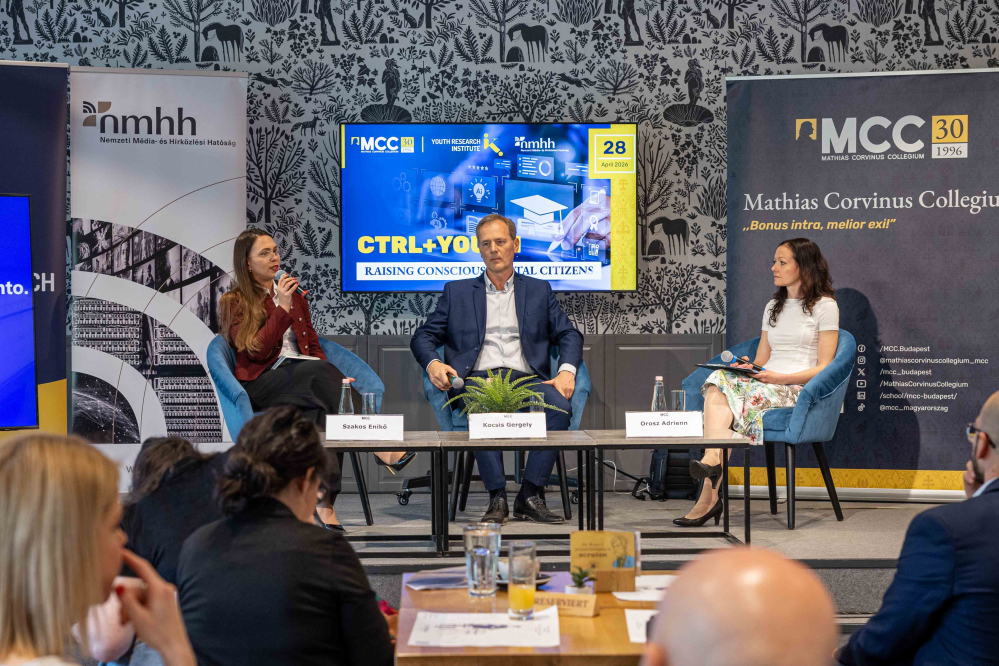
Digital technology has evolved beyond a mere instrument to become a fundamental framework of everyday existence, profoundly shaping the cognitive patterns, social relationships, and future orientations of younger generations. The expansion of the digital sphere has redefined the structures of social interaction and individual development, particularly with regard to processes of socialisation among youth. In response to this complex phenomenon, the Youth Research Institute at MCC, in collaboration with Hungary’s National Media and Infocommunications Authority (NMHH), convened the international bilingual scientific conference entitled CTRL+YOUTH – Raising Conscious Digital Citizens. The primary objective of the event was to foster transnational knowledge exchange and professional collaboration, while offering relevant theoretical and practical frameworks for parents, educators, and policymakers to support the conscious and responsible shaping of the digital environment.
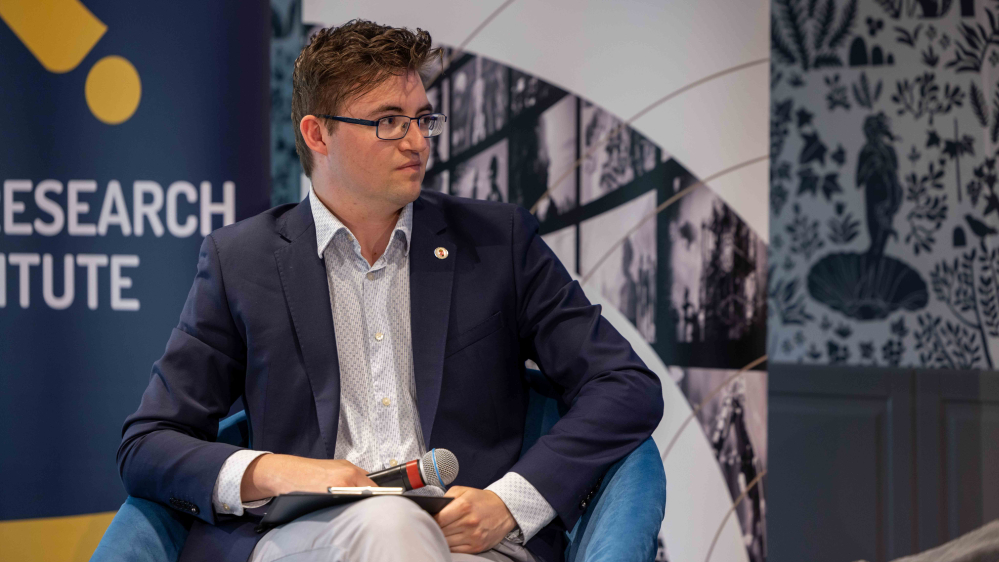
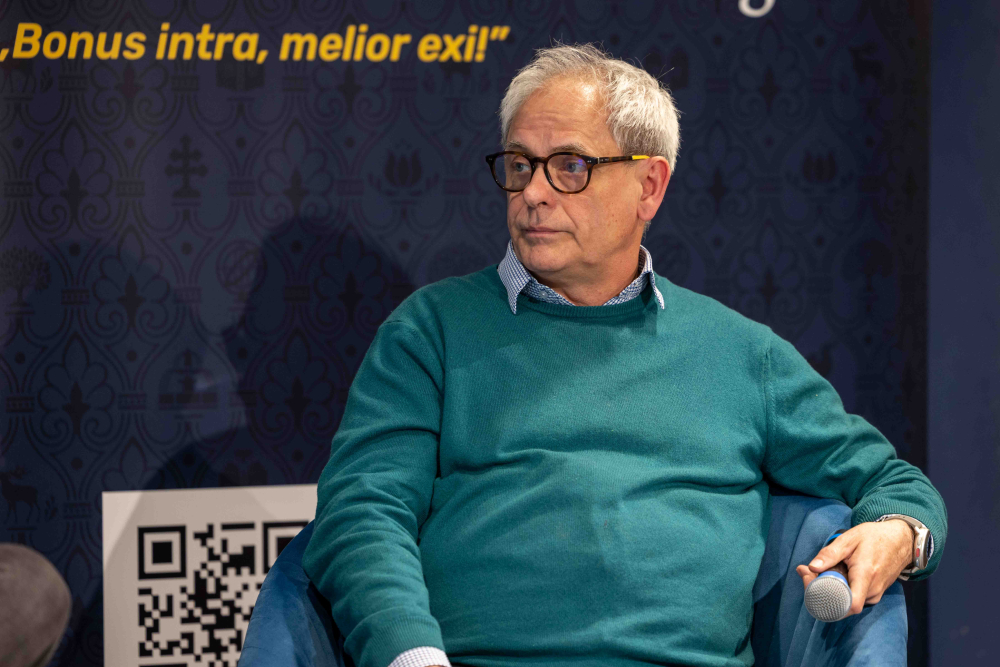
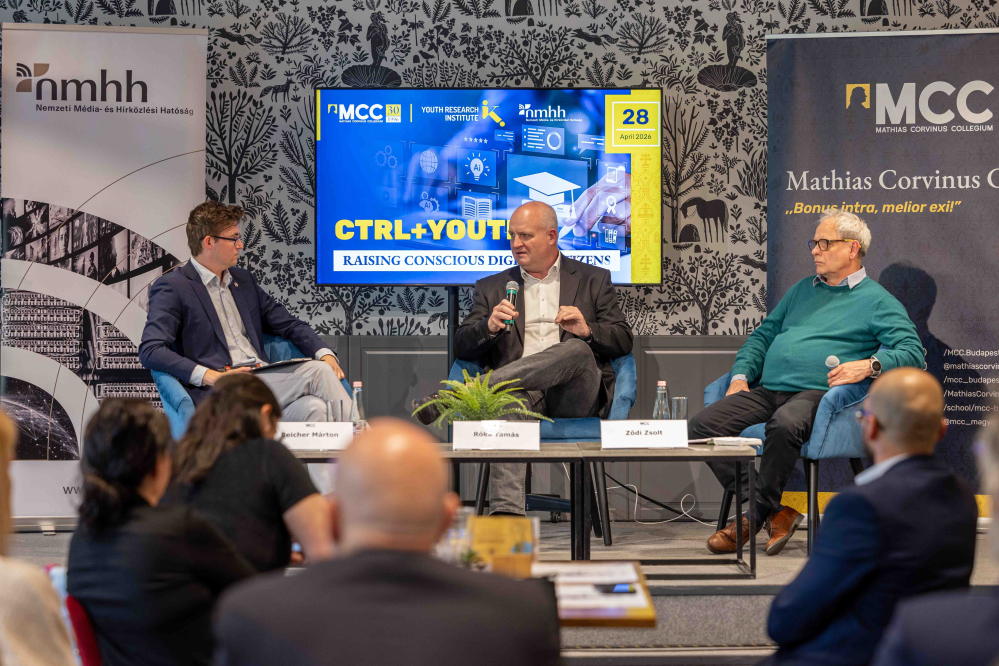
The final panel, entitled An Unleashed Future: Can Social Media Be Regulated?, addressed the legal and ethical dilemmas of regulating digital platforms. Moderated by Márton Reicher, the discussion featured Zsolt Ződi (Institute for Information Society, National University of Public Service) and Tamás Róka (Department of Online Platforms, NMHH). The discussion began from the premise that, although social media platforms are privately operated services, their significant societal impact necessitates state and international oversight. The experts highlighted key differences between US and European regulatory models: while the former largely exempts platforms from liability for content, the latter imposes stricter obligations, though their enforcement remains challenging.
One of the most critical issues discussed concerned the distinction between disinformation and harmful content, as well as the moderation thereof. The experts stressed that illegal content is not synonymous with harmful content, and that disinformation is difficult to define precisely, often appearing as a spectrum characterised by highly biased framing of events. In this global information landscape, platforms frequently balance competing interests, while the tools available to combat disinformation remain limited. It was also noted that artificial intelligence-based moderation does not yet provide a comprehensive solution due to definitional ambiguities, and that major platforms such as Facebook often attempt to limit the spread of suspicious content not through substantive moderation but by slowing dissemination via non-transparent algorithms.
The panel also addressed the protection of younger generations, emphasising that platforms with unrestricted freedom of expression are not inherently safe environments for children. Experts suggested that platforms should implement pre-emptive content filtering and age-appropriate interfaces, which are technically feasible in principle. Tamás Róka supported the regulation of age-based access, while also acknowledging the technical and data protection challenges associated with verifying users’ ages. The discussion concluded that insufficient evidence currently exists to determine whether complete prohibition or strict age restrictions would be more effective in safeguarding digital well-being.
In conclusion, the CTRL+YOUTH conference not only raised critical questions but also offered substantive answers: how to balance technological advancement with the well-being of individuals and communities, and how to prepare both younger generations and society at large for a responsible digital future. This preparation requires conscious adaptation to technological change through appropriate pedagogical methods and institutional measures—such as age-differentiated restrictions on mobile phone use in schools—implemented in a manner sensitive to developmental stages.