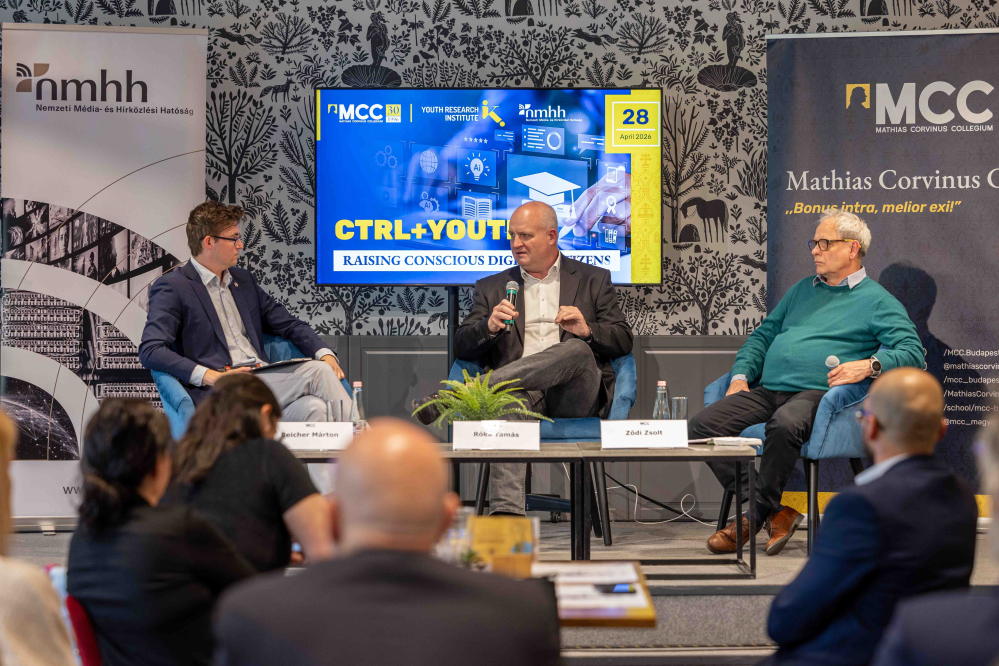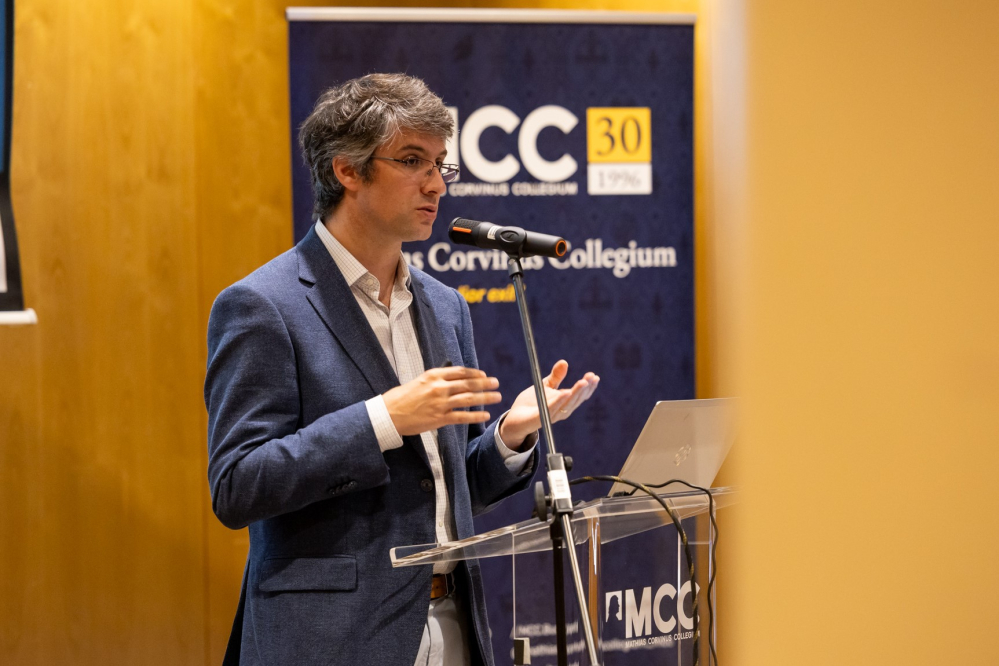

For the third consecutive year, the Youth Research Institute hosted its annual international conference, Emerging Voices, offering young doctoral researchers from around the world a platform to present their work in the field of youth studies. On 14 May, the Institute welcomed six international and two Hungarian speakers who addressed the most pressing challenges facing young people today, as well as the younger generations’ relationship with artificial intelligence (AI).
In her opening remarks, Deputy Director Georgina Kiss-Kozma highlighted that the transitional phase of youth is not only becoming increasingly prolonged, but is also undergoing profound structural transformation. Successive global crises, the defining challenges of our era, growing social isolation, and the expansion of digital culture are all leaving an imprint on the lives of young people. While both Hungarian data and international trends confirm the primary role of family and friendships as sources of trust, the conference also drew attention to the factors that undermine these bonds.
Presentations:
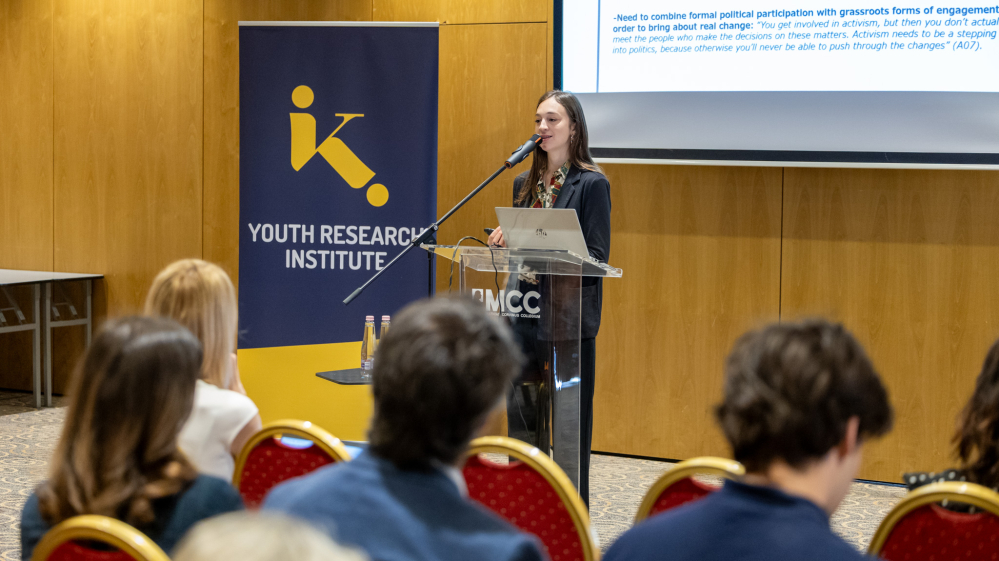
The Political Challenges of Youth in Italy: Towards an Intersectional Approach in Participation
– Marta Visioli, Department of Sociology, Catholic University of the Sacred Heart, Italy
Drawing on the findings of a qualitative study conducted in Lombardy between May 2024 and April 2025, Marta Visioli’s presentation examined the political and social challenges currently shaping the lives of young Italians, with particular attention to the ways in which they are reinterpreting politics in the context of contemporary “polycrises”. She emphasised that both gender and ethnic background influence access to political participation and shape experiences of engagement. Building on an intersectional approach and the latest scholarship on youth political participation, Visioli argued that young people’s political involvement is embedded within broader power structures and social inequalities. According to the research findings, the issues of greatest concern to young Italians today include combating gender-based and other forms of discrimination, protecting minority rights, addressing anxieties surrounding the climate crisis, and the need for educational reform. Participants in the study frequently stressed that these challenges cannot be treated as isolated problems, but instead require interconnected and intersectional political responses. Visioli’s presentation also explored emerging forms of youth participation, including the combination of digital activism and online awareness-raising with local, offline mobilisation. Political participation often appeares as a response to experiences of injustice and marginalisation, reflecting what the research describes as “intersectional agency” — a form of activism that responds simultaneously to multiple forms of inequality.
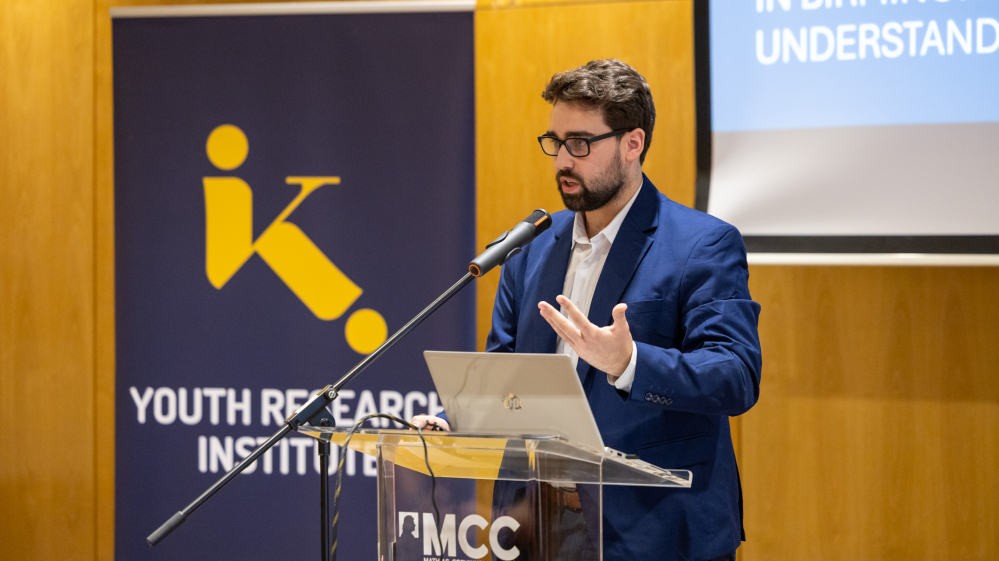
How Do Young People in Birmingham Understand Poverty?
– Liam Miles, University of Northampton, UK
Liam Miles’s presentation examined young people’s interpretations and experiences of poverty within the broader dynamics of late modernity, characterised by uncertainty, unpredictability, and risk. He analysed participants’ general perceptions of poverty, which many described as a recurring and almost inescapable cycle. One of the central themes of the presentation was the sense of political alienation and exclusion expressed by young people in relation to ongoing urban redevelopment projects in central Birmingham. Many participants felt that their communities were in decline and that urban investment primarily served the interests of businesses and large corporations. Processes of regeneration were perceived as visible manifestations of inequality, further intensifying experiences of poverty and marginalisation. Miles also addressed the religious and cultural factors shaping perceptions of poverty. A number of participants emphasised the importance of family reputation, honour, and social expectations, while feelings of shame emerged strongly in discussions surrounding economic hardship. At the same time, young people frequently expressed uncertainty about their own futures, which they often associated with a limited understanding of the structural causes of poverty, as well as restricted access to information and support. Miles identified greater awareness and stronger educational initiatives as key instruments for positive change. He further argued that contemporary processes of social and economic transformation reproduce various forms of ontological insecurity, as many young people are simultaneously attempting to plan for the future while coping with everyday economic pressures.
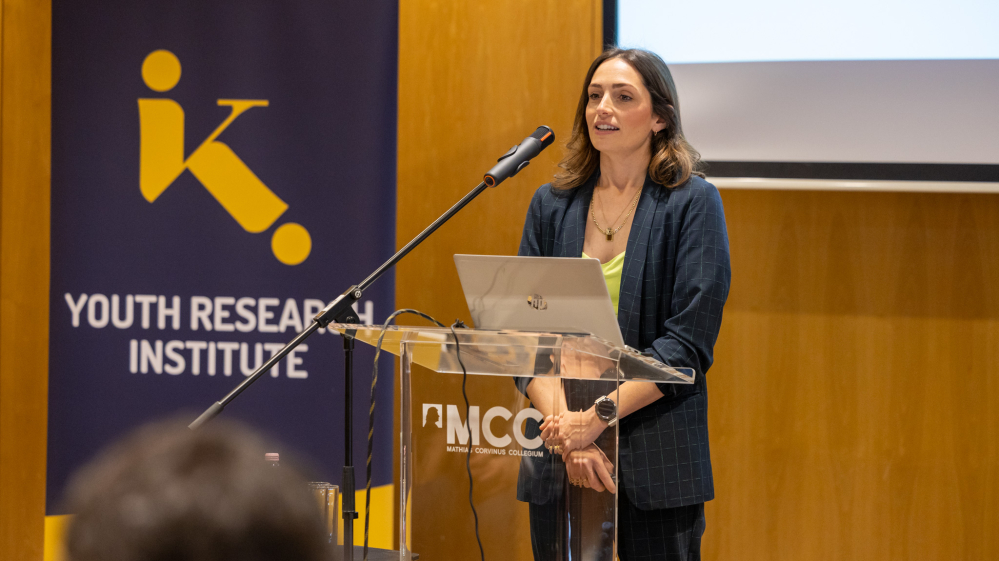
Friends, Free Time, and Fairness: A Factorial Survey Experiment on Fertility Intentions in a Lowest-Low Fertility Context
– Erin Wingerter, University of Navarra, Spain
In her presentation, Erin Wingerter, a doctoral researcher at the University of Navarra, examined the demographic crisis affecting regions with extremely low fertility rates, particularly Spain, through an innovative sociological approach. Moving beyond the limitations of traditional questionnaire-based surveys, her research employed a factorial experimental method in which respondents were asked to evaluate systematically varied life situations, known as vignettes. The central question of the study was the extent to which peer-group influence, the preservation of personal leisure time, and fairness in the division of domestic labour between partners shape intentions to have children. The findings highlighted the crucial role of gender equity in contemporary decisions surrounding parenthood. Women’s willingness to have children declined sharply when childcare responsibilities were expected to be distributed unequally. The research also underscored the phenomenon of “social contagion”, suggesting that child-free friendship networks, together with concerns about preserving personal autonomy and leisure time, often constitute more significant barriers to childbearing than purely economic constraints. Wingerter concluded that achieving demographic renewal requires a broader cultural shift extending beyond financial incentives, one that addresses social norms and promotes genuine gender equality.
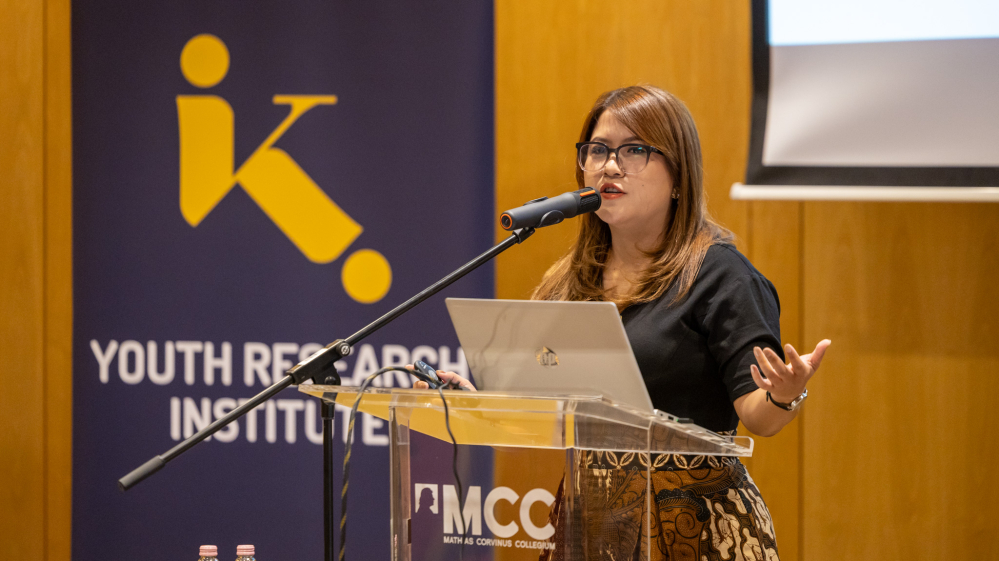
The Ethics of Care: Young People’s Moral Orientations in Contemporary Society
– Epsilandri Septyarini, Sarjanawiyata Tamansiswa University, Indonesia
Epsilandri Septyarini’s presentation explored how young Indonesians navigate moral questions within today’s rapidly changing and increasingly challenging social environment. Based on a scenario-driven survey methodology, the research focused on how young people balance justice-oriented and care-oriented moral frameworks. While the former emphasises fairness, adherence to rules, and impartiality, the latter prioritises empathy, interpersonal relationships, and sensitivity to specific circumstances. According to Septyarini, Indonesian youth do not merely adopt inherited social norms; rather, they actively shape and continuously reinterpret their own ethical positions as moral agents. Social media plays a decisive role in this process. On the one hand, digital platforms amplify public demands for accountability and justice, as demonstrated in relation to the Garuda Biru protests and the Ronald Tannur case. On the other hand, they also create new spaces for solidarity and compassion, for example through the rapid online mobilisation of support for victims of natural disasters. The presentation further highlighted how phenomena such as cancel culture, digital philanthropy, and debates surrounding the regulation of minors’ social media use significantly influence young people’s moral development and their understanding of responsibility, empathy, and justice. Septyarini also examined how factors such as gender, religiosity, and educational background shape these moral orientations. The findings suggest that young people’s moral reasoning cannot be reduced to simple, opposing categories. Rather, their decisions reflect a continual negotiation between the principles of justice and care, shaped by specific social contexts, interpersonal relationships, and changing environmental conditions.