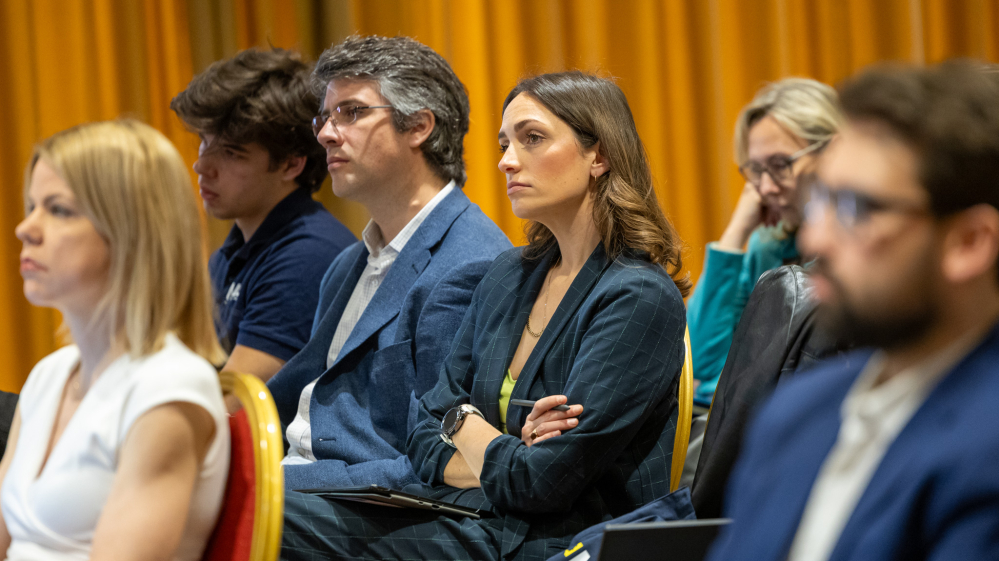
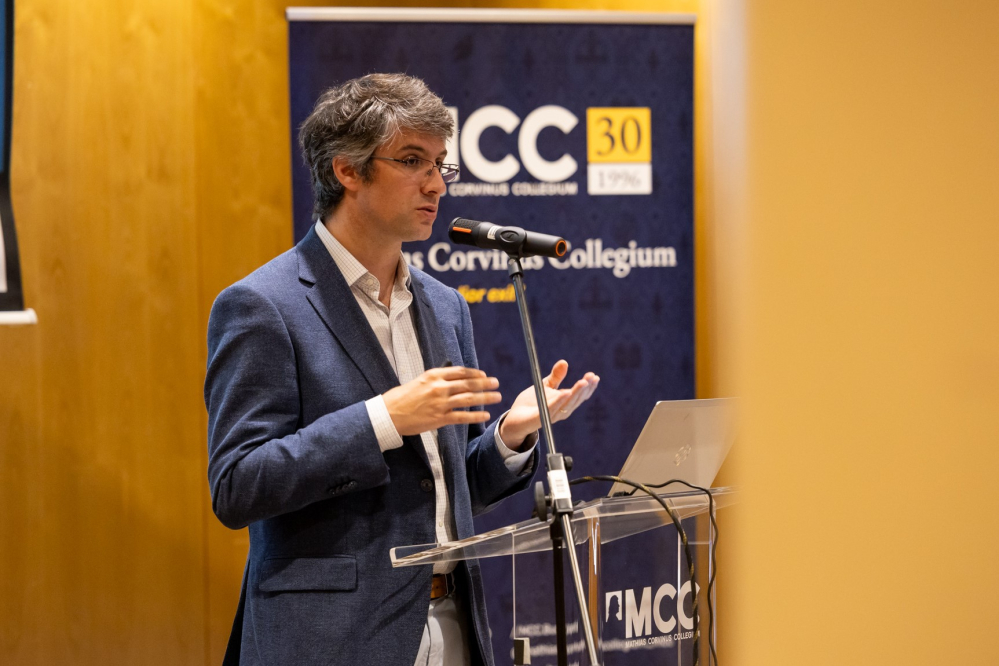
For the third consecutive year, the Youth Research Institute hosted its annual international conference, Emerging Voices, offering young doctoral researchers from around the world a platform to present their work in the field of youth studies. On 14 May, the Institute welcomed six international and two Hungarian speakers who addressed the most pressing challenges facing young people today, as well as the younger generations’ relationship with artificial intelligence (AI).
Presentations:
The Impact of Co-Present Smartphone Use on the Quality of Face-to-Face Social Interactions, Closeness, and Loneliness in Everyday Life
– Aurelio Fernández, University of Navarra, Spain
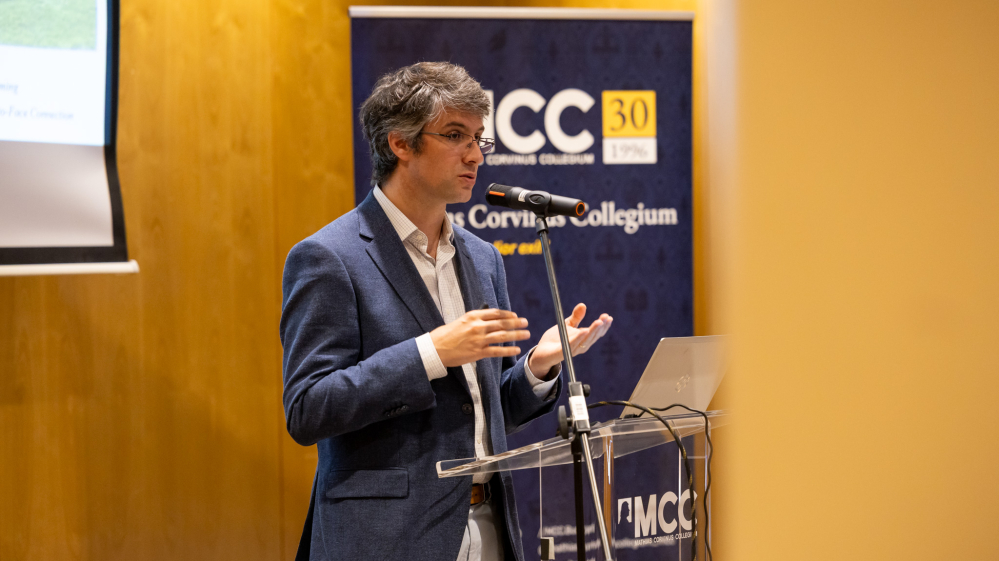
Aurelio Fernández’s presentation examined the tension between smartphone use and the quality of in-person social interaction in everyday life. Central to his research is the concept of “co-presence”, which explores how the depth of conversation and emotional connection are altered when a digital device is physically present between individuals, even when it is not actively being used. Fernández’s findings demonstrate that the mere visibility of a smartphone, or its occasional checking — a phenomenon commonly referred to as phubbing — reduces satisfaction derived from social interactions and inhibits the development of intimacy between participants. He also emphasised the long-term psychological consequences of these patterns, showing that technologically interrupted social moments paradoxically increase feelings of loneliness, despite the device’s capacity to provide continuous digital connectivity. According to Fernández, the absence of high-quality, uninterrupted face-to-face communication weakens social bonds and contributes to a form of “digital alienation”, even within close personal relationships. The presentation concluded by stressing the importance of conscious and deliberate technology use in preserving mental well-being and genuine social closeness in an increasingly hyperconnected society.
Do Algorithms Shape Public Discourse? A Systematic Literature Review
– Roland Tardi, Head of Academy, Mathias Corvinus Collegium, Hungary
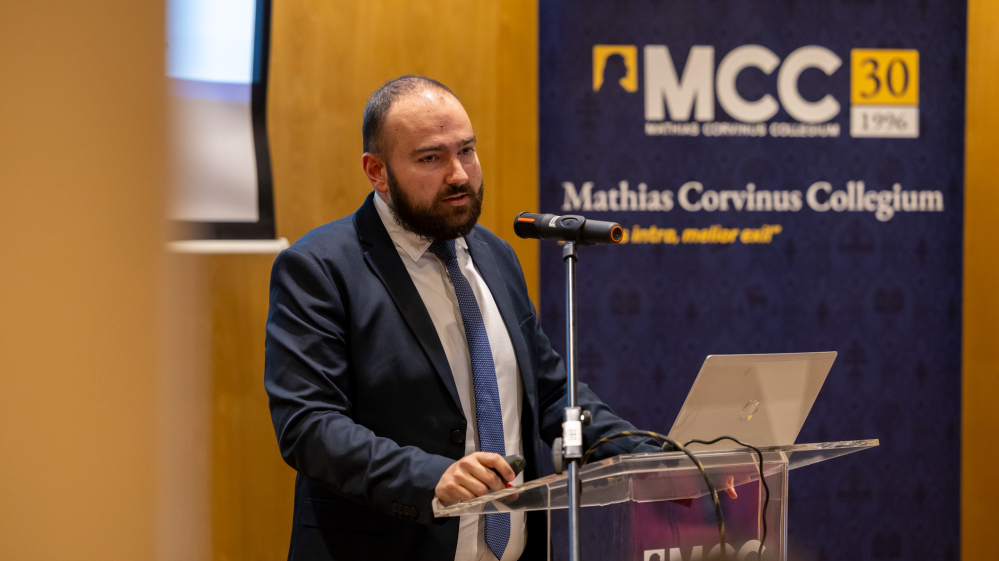
Roland Tardi’s presentation analysed the relationship between algorithms and contemporary public discourse through a comprehensive systematic literature review. The central question of his research concerned the extent to which the algorithms underlying social media platforms and search engines have become the new “gatekeepers” of the public sphere, and how far they are reshaping the structure of democratic discourse. By synthesising relevant academic publications, Tardi examined the phenomena of “echo chambers” and “filter bubbles”, highlighting the mechanisms through which algorithms narrow the range of information users encounter on the basis of prior preferences, thereby intensifying social polarisation. The presentation demonstrated that algorithmic content recommendation is not merely a technical process, but also a significant social and political force that fundamentally shapes both the agenda of public discourse and the diversity of opinions within it. Tardi also addressed issues surrounding the transparency of platform algorithms and questions of individual autonomy, emphasising the risks posed to social cohesion by the loss of control over one’s information environment. He concluded that preserving the integrity of digital public discourse requires greater algorithmic awareness and a more critical approach to technological systems.
Youth Mobility, Language Immersion, and Self-Directed Learning
– Meyly Kheng, University of Debrecen, Hungary
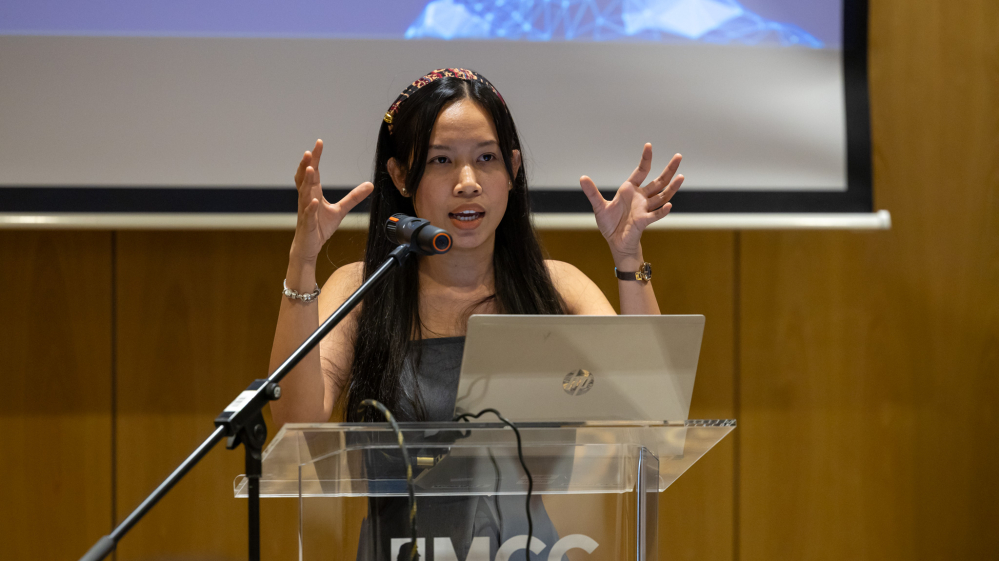
In her presentation, Meyly Kheng, a Cambodian-born doctoral researcher at the University of Debrecen, explored how international educational experiences shape language acquisition and learner autonomy among young people engaged in global mobility. Her qualitative research was based on interviews with eighteen students with international educational backgrounds whose studies began in Cambodia and later continued across different countries and cultural contexts. The findings highlighted the decisive role of linguistic immersion. According to participants, everyday communication, social interaction, and digital platforms often provide more effective environments for language learning than traditional classroom instruction. Informal learning settings proved particularly important for the development of linguistic competence and confident language use. With regard to self-directed learning, the research demonstrated that students consciously develop their own learning strategies, actively using digital tools and international social networks to adapt to their individual needs and learning styles. Participants reported that studying abroad contributed not only to the development of language skills, but also to transformations in self-confidence, self-perception, and conceptions of education. Kheng also reflected on her own experiences learning Hungarian and concluded by emphasising that, in a globalised world, learning increasingly takes place within informal and social contexts, while young people themselves act as active agents in shaping their educational trajectories. She suggested that future research should place greater emphasis on transnational educational experiences and non-traditional learning pathways.
Who Writes the Homework Today? Artificial Intelligence and the School Years
– Enikő Szakos, Learning Research Institute, Mathias Corvinus Collegium; Head of the Ernő Fináczy Education Research Centre, Ludovika University of Public Service, Hungary
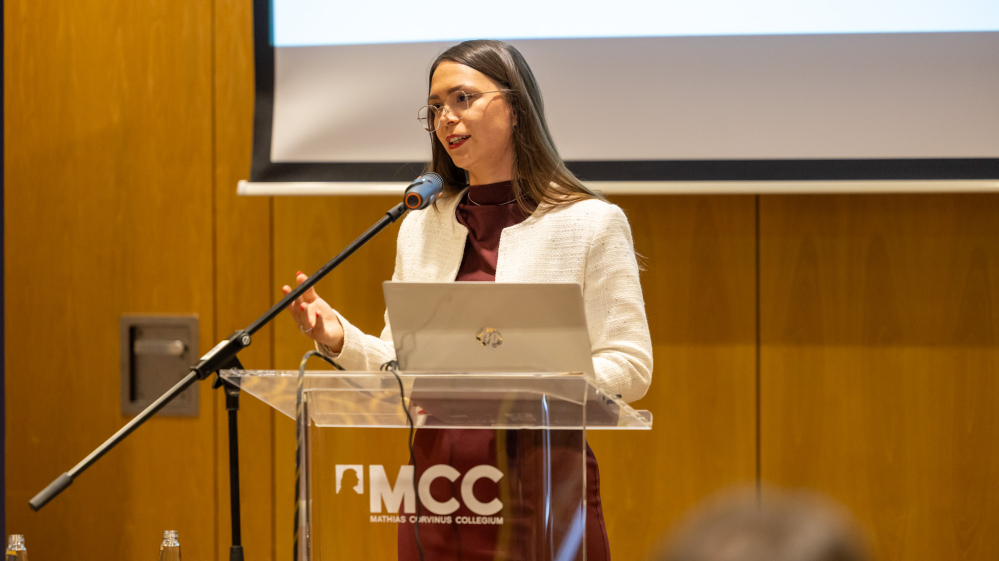
Enikő Szakos’s presentation examined the growing presence of artificial intelligence (AI) in education, focusing on the tensions created by AI-based text generation within traditional systems of homework and knowledge assessment. Her analysis demonstrated that the emergence of these technologies raises far more than questions of plagiarism; it fundamentally compels a renewal of educational methodology itself. According to Szakos, the question of “who writes the homework” reflects a deeper pedagogical paradigm shift: the focus of education is moving away from the reproduction of answers towards critical thinking, the ability to formulate effective questions (prompt engineering), and the evaluation of AI-generated content. The presentation highlighted the dual nature of AI use during the school years. On the one hand, AI can function as a personalised learning assistant, supporting both educational inclusion and talent development. On the other hand, it may also constitute a risk factor by weakening the development of skills based on independent effort and practice. Szakos stressed that educational systems cannot isolate themselves from technological change. Instead, there is a need for frameworks capable of integrating AI into curricula while preserving the central role of teachers and the primacy of human creativity. She concluded that the objective should not be prohibition, but rather the cultivation of ethical and conscious AI use that enables students to navigate an increasingly technology-intensive labour market successfully.
The panels were followed by a professional evaluation of the presentations delivered throughout the day. The reviewers gave particular recognition to the presentation by Erin Wingerter, doctoral researcher at the University of Navarra, whose study of young people’s fertility intentions highlighted how future-planning strategies and aspirations for family formation reflect generational responses to contemporary social and economic uncertainty. The conference concluded with an interactive workshop, moderated by our research colleague Krisztián Tóth, during which conference participants and members of the audience discussed the challenges facing young researchers, the specific characteristics of their respective fields of inquiry, the growing influence of international trends within their own countries, and the broader challenges associated with doctoral education.